
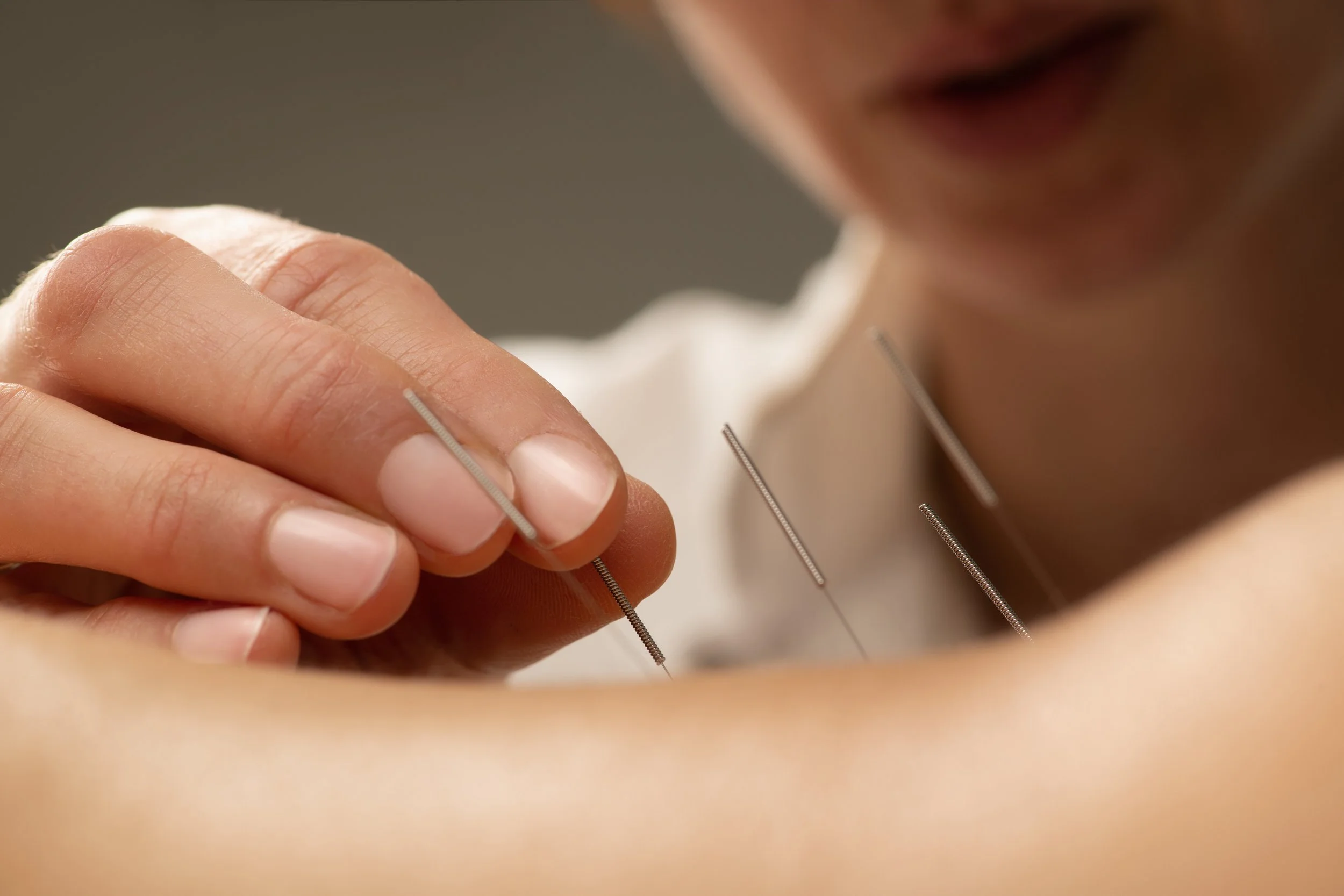
Acupuncture for Perimenopause and Menopause in Overland Park
Acupuncture can help with perimenopause. In a large pragmatic trial, hot flash frequency fell 36.7 percent over six months, with maximum benefit at a median of eight treatments and adverse effects in three women out of 209. Against a convincing placebo, that advantage is not established. Grace Family Acupuncture has served Overland Park, Kansas since 2002.
Acupuncture can help with perimenopause. In a large pragmatic trial, hot flash frequency fell 36.7 percent over six months, with maximum benefit at a median of eight treatments and adverse effects in three women out of 209. Against a convincing placebo, that advantage is not established. Grace Family Acupuncture has served Overland Park, Kansas since 2002.
Both of those facts are true, and most pages on this topic show you only one. Research summaries hand you a verdict with no practitioner behind it. Clinic pages hand you a practitioner with no evidence behind her. You are forty-six, you feel unrecognizable, your physician offered hormone therapy or nothing, and you are trying to work out whether perimenopause acupuncture is a serious clinical option or an elaborate way to lie down for an hour. That question deserves the whole picture.
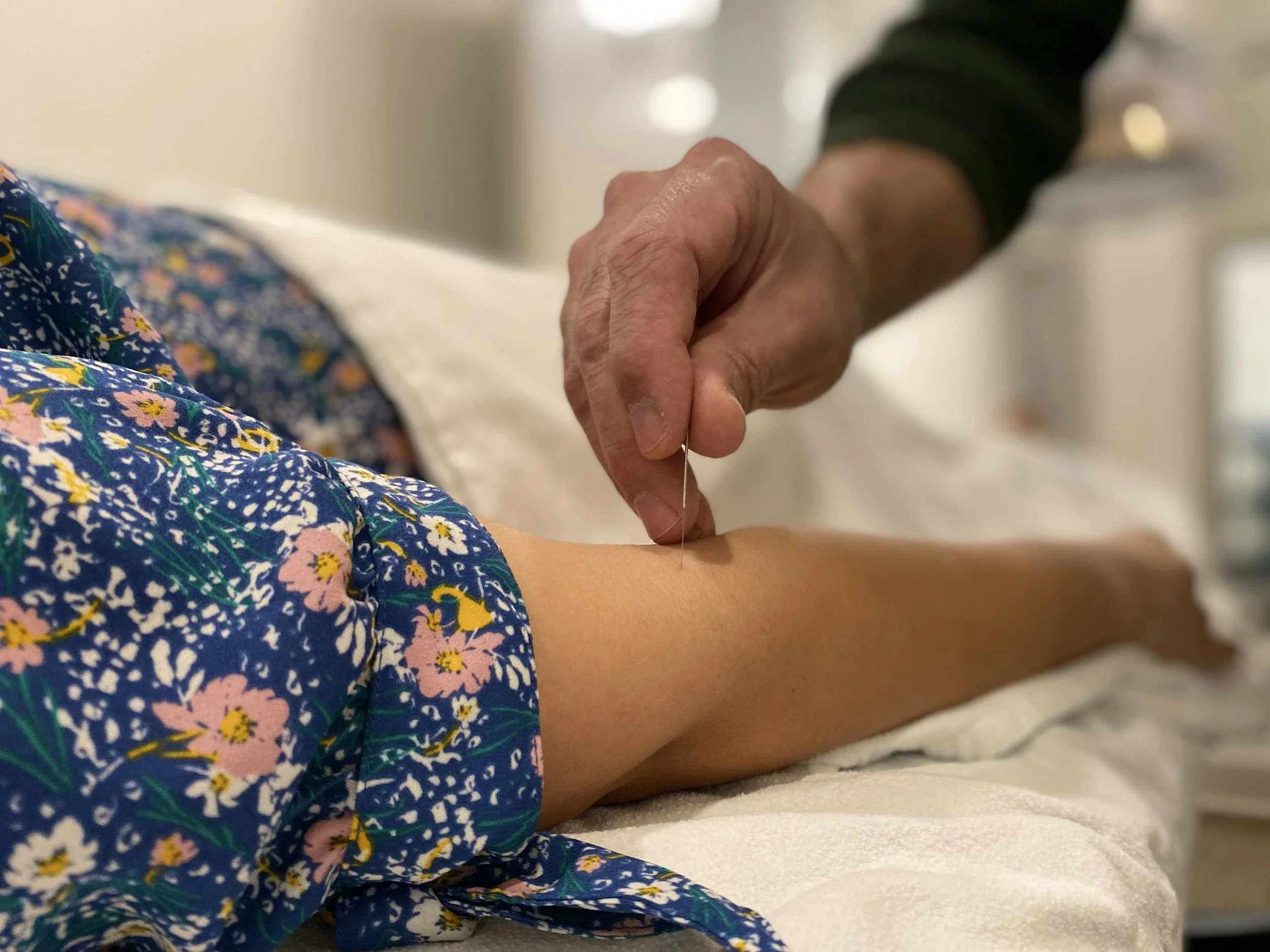
What perimenopause actually is, and why symptoms arrive before your periods stop
Perimenopause is the transition, not the destination. It begins when ovarian hormone output starts fluctuating rather than declining smoothly, and it ends twelve months after your final period. That window commonly runs several years and often opens in your forties.
Here is the part women are rarely told, and the reason so many arrive at a first appointment convinced something else is wrong. Perimenopausal estrogen does not fall in a straight line. It swings, sometimes to unusually high levels, then drops. Symptoms track the swing, not the level. So you can have regular periods, a normal blood panel, and still experience hot flashes, night waking at three in the morning, joint stiffness that was not there last year, a shorter fuse, and a flattened mood.
A hormone test on a fluctuating system captures one point on a moving curve. That is why "your labs are normal" and "I feel unrecognizable" are not contradictory statements. They are both accurate descriptions of the same body.
What acupuncture can and cannot do for menopause symptoms
Where the evidence is strongest
The Acupuncture in Menopause trial, known as AIM, is the most useful study for a woman making this decision, because it tested acupuncture the way a real clinic delivers it rather than as a fixed laboratory protocol. Two hundred and nine perimenopausal and postmenopausal women aged forty-five to sixty, all experiencing at least four vasomotor symptoms a day, were randomized to a course of acupuncture or to a waiting list.
Vasomotor symptoms are what that trial measured. Sleep and mood are what patients here most often report changing first, and we present that as clinical observation rather than as a trial result. Women frequently tell us the night waking settles before the daytime flashes do.
Where the evidence is thin, said plainly
Here is the part most clinic pages leave out.
When acupuncture is compared with sham acupuncture rather than with no treatment, the advantage largely disappears. A trial of 327 women with moderately severe hot flashes compared standardized Chinese medicine acupuncture against non-insertive sham over ten treatments and concluded that real acupuncture was not superior to the sham. A Cochrane systematic review covering sixteen trials and 1,155 women reached the same position: insufficient evidence to determine whether acupuncture controls menopausal vasomotor symptoms, no significant difference against sham, an apparent benefit against no treatment, and less effect than hormone therapy. The National Center for Complementary and Integrative Health states the same conclusion, and the North American Menopause Society has not recommended acupuncture for hot flash management.
The AIM investigators were candid about this themselves. They wrote that it is possible most or even all of the clinical benefit observed came from patients' expectations of benefit, or from the additional care and attention they received.
So what should you take from that as a person, not a statistician?
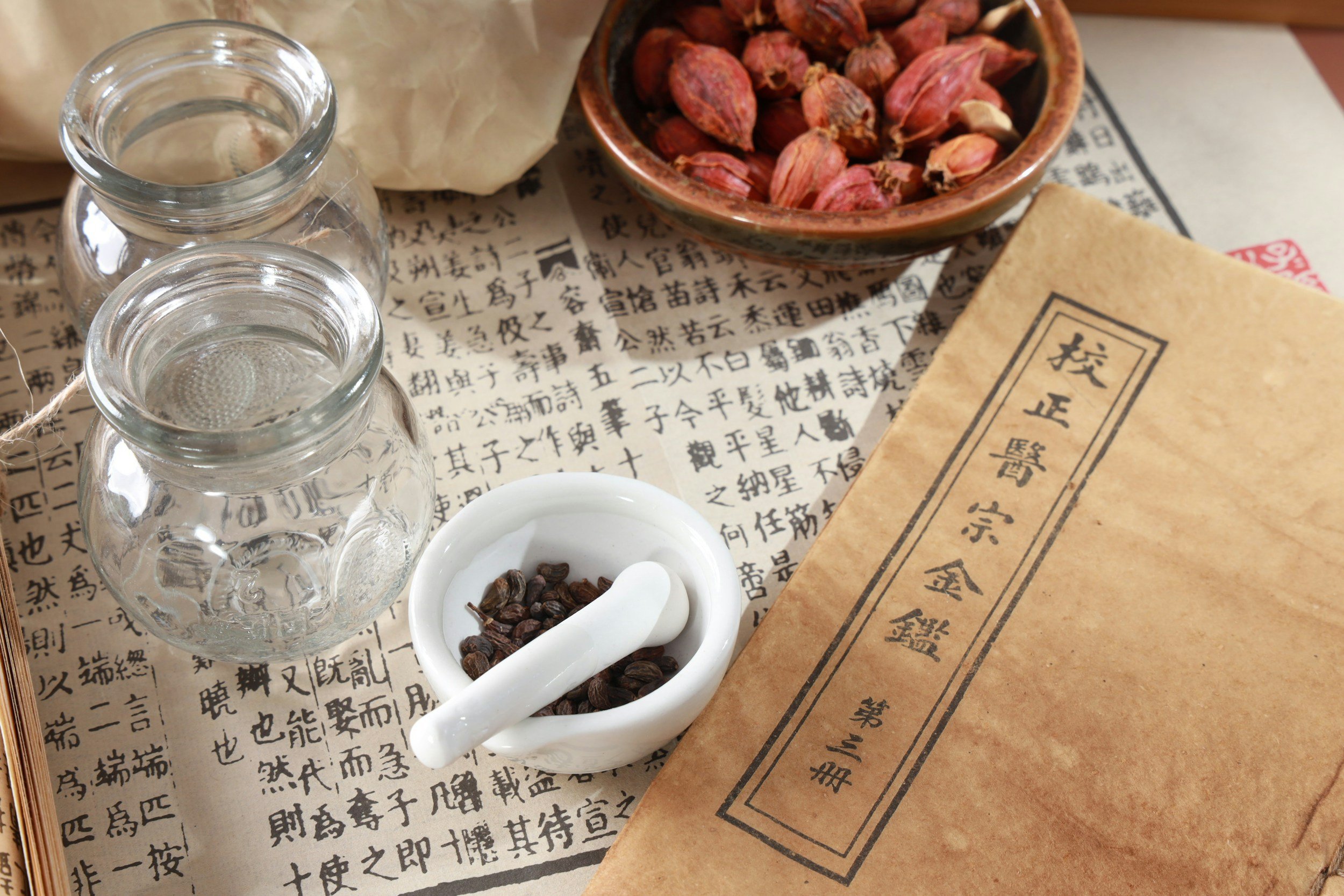
Acupuncture consistently and measurably outperforms doing nothing in trials. It has not convincingly outperformed a well-designed placebo. If you want a treatment proven to work through a mechanism isolated from expectation and clinical attention, the evidence does not support that claim and we will not make it. If you want a measurable reduction in hot flashes over roughly eight weeks, with a very low risk of harm, alongside or instead of hormone therapy, the evidence supports trying it, and the trial data tells you how quickly you will know.
We would rather you book on an accurate picture than a flattering one.
How Chinese medicine reads perimenopause differently
Chinese medicine does not diagnose perimenopause. It diagnoses you.
The framework predates hormone assays entirely, so it never tried to explain midlife change through estrogen. It describes a decline in what the classical texts call kidney essence, the reserve governing reproduction, bone, and aging, together with the gradual emptying of the Chong and Ren vessels that regulate the menstrual cycle. As the body's cooling capacity falls behind, heat rises unopposed: flushing, night sweats, restless three a.m. waking, dry eyes.
That is the foundation, but it is not the whole diagnosis, and clinics that stop there are giving you a textbook answer. The volatility specific to perimenopause, the shortened fuse and the cycling between anger and tears, is usually driven by liver qi constraint sitting on top of that kidney deficiency. Which layer dominates determines the treatment.
As a sorting system this is precise, because it separates women with the same complaint into different treatment groups. Two patients arrive with hot flashes. One is drenched at night, sleeps poorly, feels hot but is chilly at the extremities, and is exhausted. The other flushes in the afternoon under stress, holds tension in her ribs and jaw, and cycles between irritation and tears. Same symptom, different pattern, different points, different herbal formula.
Symptoms we treat most often
Hot flashes and night sweats. The most studied application and the most common reason women contact us. See acupuncture for hot flashes in Overland Park for how many sessions the trial data suggests before you should expect a change.
Joint pain and morning stiffness. Aching hands, stiff hips, and shoulders that hurt on waking are among the most under-recognized perimenopausal symptoms, and among the most likely to be attributed to age or exercise instead of hormone change.
Anxiety, mood swings, and panic. Anxiety without a matching cause, a fuse noticeably shorter than your own, and first-time panic in a woman with no history of it. See acupuncture for anxiety and stress.
Sleep disruption and fatigue. Falling asleep normally and waking at three, or sleeping through and waking unrefreshed. Sleep is often the first symptom to respond, and the one women say changed their life most.
Hormone balance. Cycle change, weight redistribution, brain fog, and libido, addressed through our women's health acupuncture in Overland Park services. Women still trying to conceive during the transition should start with fertility acupuncture instead.
Chinese herbal medicine is frequently prescribed alongside these treatments and is a distinct part of the care we offer.
What a course of treatment looks like
Every session is 60 minutes. That is the actual appointment length, not a range.
Your first visit is a full intake: symptom history, menstrual history, sleep, digestion, temperature patterns, and stress, plus tongue and pulse assessment. From that we identify your pattern and build a plan.
A representative course, drawn from typical presentations rather than from any one patient. The scheduling below is how a course is usually built, not a trial protocol:
Weeks 1 to 2, sessions 1 to 4. Twice weekly. Around the third or fourth session the night waking often eases, usually before the daytime flashes change.
Weeks 3 to 6, sessions 5 to 8. Weekly. Daytime flashes become fewer and shorter. Around week seven is where the trial data places maximum effect.
After session 8. Step down to monthly maintenance.
The practical rule: commit to eight sessions before judging the result, and expect the first real signal by session three or four. If nothing has changed by the midpoint, you should be told so plainly and offered the option to change approach or stop. Open-ended treatment with no review point is not good practice.
Acupuncture alongside HRT
This is not a choice between the two, and we do not ask patients to make it one.
Hormone therapy is the most effective available treatment for vasomotor symptoms, and the research is clear on that. Women come to us for three reasons: they cannot take hormone therapy, they prefer not to, or they are taking it and still have symptoms it has not resolved, most often sleep, anxiety, joint pain, and fatigue. All three are appropriate.
Acupuncture is used alongside hormone therapy rather than instead of it. Tell us what you are taking, including any herbal supplements, and tell your prescribing physician that you are receiving acupuncture and, if applicable, Chinese herbal medicine. A clinician who discourages you from telling your physician is a clinician to leave.
Serving Overland Park and the Kansas City metro
Grace Family Acupuncture is located at 7111 W 98th Terrace in Overland Park, Kansas, and has served Johnson County and the Kansas City metro since 2002. Patients travel to us from Leawood, Prairie Village, Mission Hills, Fairway, Olathe, Lenexa, and Shawnee.
Care is provided by Dr. Yang Gong, DTCM, L.Ac., Founder and Senior Clinician, who has more than 30 years of clinical experience in acupuncture and herbal medicine, and Dr. Jing Gong, DAOM, Dipl. O.M., L.Ac., Managing Director and Principal Clinician, a fifth-generation Traditional Chinese Medicine practitioner and board certified acupuncturist and herbalist.
The clinic is private-pay. That is a deliberate structure rather than a pricing decision. It is what allows a full 60-minute appointment, a plan adjusted to what your symptoms are actually doing, and enough time at each visit to reassess rather than repeat.
Frequently asked questions
-
Yes, with a qualification. Trial evidence shows acupuncture reduces hot flash frequency by roughly 37 percent over six months compared with no treatment. Compared against sham acupuncture the advantage is not established. The risk of harm is very low.
-
Proposed mechanisms include increased local blood flow, release of the body's own pain-modulating and mood-regulating compounds, and a shift of the nervous system toward its parasympathetic state. None of these is settled, which is part of the honest answer. In Chinese medicine terms, treatment restores balance between the body's cooling and warming functions as ovarian output declines.
-
It is a reasonable option if you cannot use hormone therapy, prefer not to, or have residual symptoms despite it. It is not a replacement for hormone therapy in effectiveness for hot flashes, and it carries a very low adverse event rate.
-
Sleep is one of the more consistently reported improvements, and clinically it is often the first symptom to shift, frequently before daytime flashes change. Waking at three in the morning and being unable to return to sleep is the most common sleep presentation we see.
-
Perimenopausal anxiety, mood swings, and first-onset panic are among the most common reasons women in this age group contact us. Treatment addresses these as part of the same underlying pattern rather than as a separate condition.
-
Joint pain and morning stiffness are genuine perimenopausal symptoms and among the most commonly misattributed to age alone. Acupuncture has a stronger general evidence base for musculoskeletal pain than for vasomotor symptoms.
-
Against no treatment, yes, for vasomotor symptoms, which is what the trial measured. Against a placebo control, the evidence does not establish a difference. We state both because you are entitled to decide on the full picture.
-
The measured benefit is reduced hot flash frequency, with a low risk of adverse effects. Better sleep and steadier mood are what patients here most often report, offered as clinical observation rather than trial evidence. It can be used alongside hormone therapy or where hormone therapy is not an option, and you should know whether it is working within about eight sessions rather than months.