
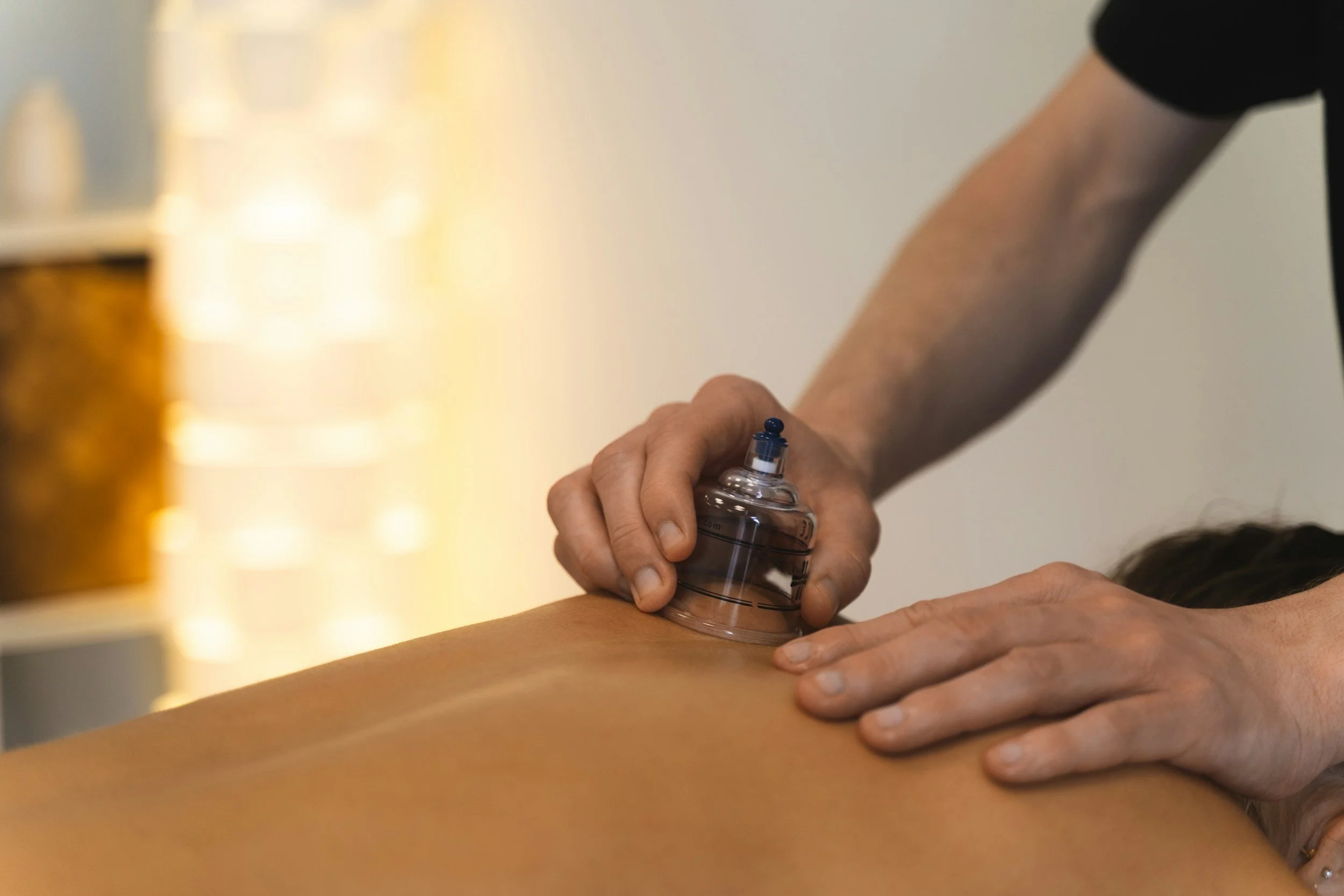
Cupping therapy on the neck and shoulders can ease the tight muscles that feed many tension headaches. Cups placed on the back of the neck, across the shoulders, and over the upper back use suction to lift the skin and the tissue beneath it, with the aim of loosening tight muscle and improving local circulation. It is not a migraine cure, and we often pair it with acupuncture rather than using it on its own.
If your headaches start at the base of your skull after a long day hunched over a desk in Overland Park or Lenexa, the problem is often the shoulders, not the head. That is where cupping does its work.
How cupping releases neck and shoulder tension
Cupping is a traditional technique, long used in Chinese medicine, that creates suction on the skin. At Grace Family Acupuncture, it is done with traditional fire cupping, using glass cups, or with plastic cups, either left in place over a tight area or moved slowly across a larger band of muscle.
The suction lifts the tissue upward. Over the upper trapezius, the broad muscle that runs from the base of the skull across the top of each shoulder, that lift is aimed at the stiffness and knots that hold the neck in a braced position. In Traditional Chinese Medicine, this kind of stuck, knotted tension is read as a blood stasis pattern, a kind of stagnation in which flow through the area slows and the muscle stays tight and sore. Cupping is used to move that stagnation.
What to expect during neck cupping
The cups are placed on the treatment area to create gentle suction.
They are either left in place or moved slowly across the muscle.
Most people feel a pulling or tight sensation rather than pain.
Circular marks appear afterward and fade on their own.
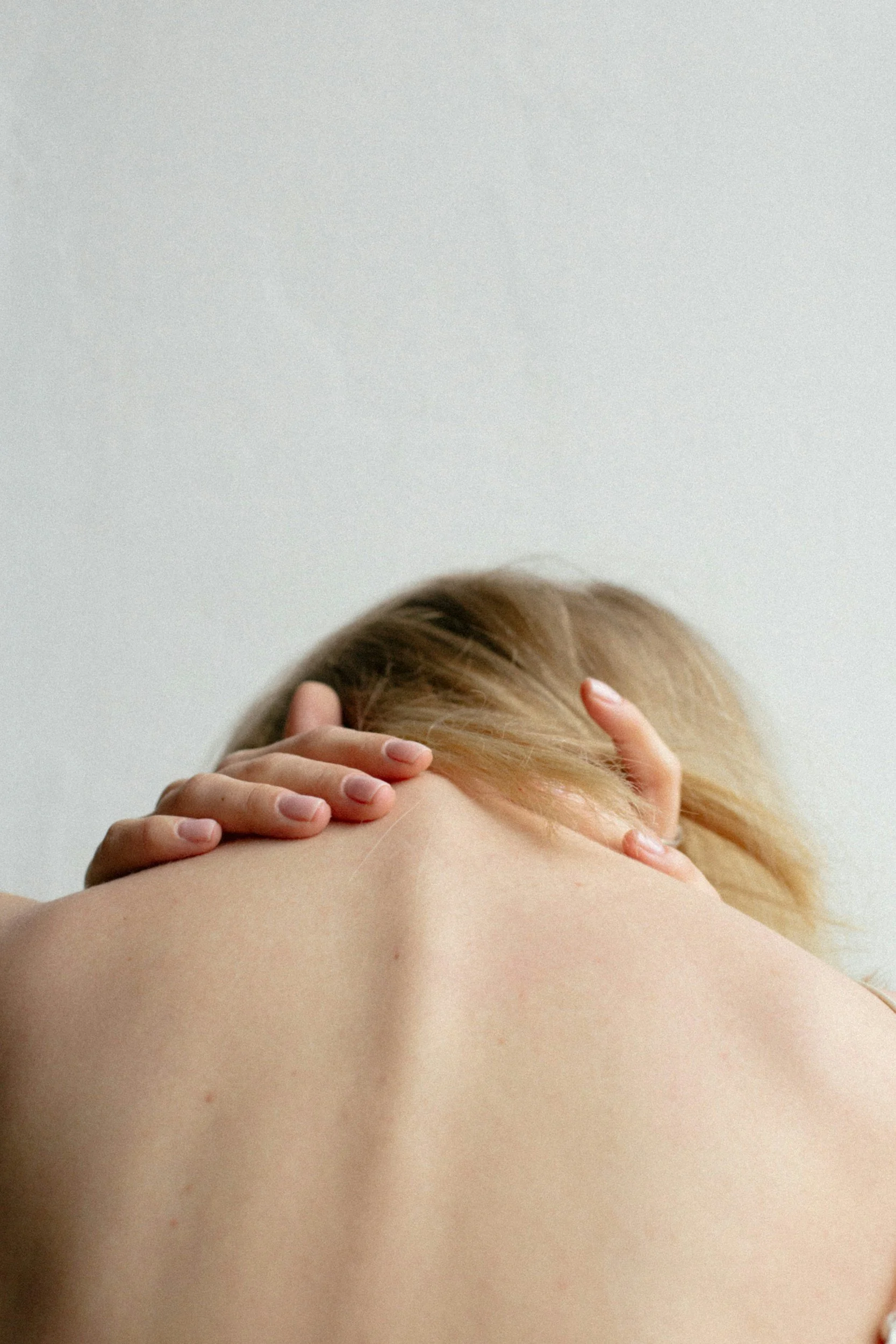
Can cupping help tension headaches and migraines?
For neck pain, trials suggest cupping can reduce pain, although the evidence is low in quality and not conclusive. Most cupping research is low in quality, and the trials we rely on look at neck pain rather than headaches.
That shapes how we use it:
Tension-type and neck-driven headaches: cupping targets the neck and shoulder tension that feeds them, usually as part of a broader acupuncture plan.
Migraines: cupping may ease the neck and shoulder tightness that can come with migraines, but prevention rests on a course of acupuncture. Our guide to acupuncture for migraine prevention covers that plan.
Jaw tension headaches: cupping is usually applied to the neck and shoulders rather than the face. Our guide to TMJ and jaw tension headaches explains the jaw side.
Where the cups go, and where they never go
On a neck and headache treatment, cups usually go:
across the tops of the shoulders, over the upper trapezius
along the muscles at the back of the neck
across the upper back, between and above the shoulder blades
Cupping should not go over the front or sides of the throat, where major blood vessels and lymph nodes sit close to the surface. It should also stay off the scalp and off broken, inflamed, or irritated skin.
What the marks mean and how long they last
Cupping leaves temporary circular marks. They come from suction drawing blood toward the surface, not from cutting the skin, and they generally fade over several days, although the time varies from person to person. Some tenderness or mild skin irritation can follow. Traditional Chinese Medicine reads the color of the marks as a sign of how much stagnation the cups drew up; our cupping page explains what each shade means.
One practical tip: if you see a physician or physical therapist while the marks are visible, mention the cupping so they know where the marks came from.
Cupping with acupuncture
For a neck-driven headache, cupping is often paired with acupuncture rather than used as a replacement for it. Acupuncture works on the points at the base of the skull, the shoulders, and the hands and feet that address the pattern behind the tension; cupping then works across the broad sheets of muscle that needles reach one point at a time. Our guide to acupuncture for neck pain and tension headaches explains the needle side of that plan.
Cupping can also be booked as its own appointment.
Who should avoid cupping
Cupping is not suitable for everyone. Let us know when you book or at your first visit, and check with your physician where relevant, if you:
take blood thinners or have a bleeding disorder
have a pacemaker
are pregnant
have broken, inflamed, or sensitive skin in the area, or an eczema or psoriasis flare
have varicose veins, a recent fracture, or a history of blood clots in the area
have an active infection or anemia, or are in treatment for cancer or a serious organ condition
We assess these risks at your first visit and do not apply cups over damaged skin or anywhere they could cause harm. Sudden, severe headaches, or headaches with fever, confusion, weakness, or vision changes, need a physician first, not cupping.
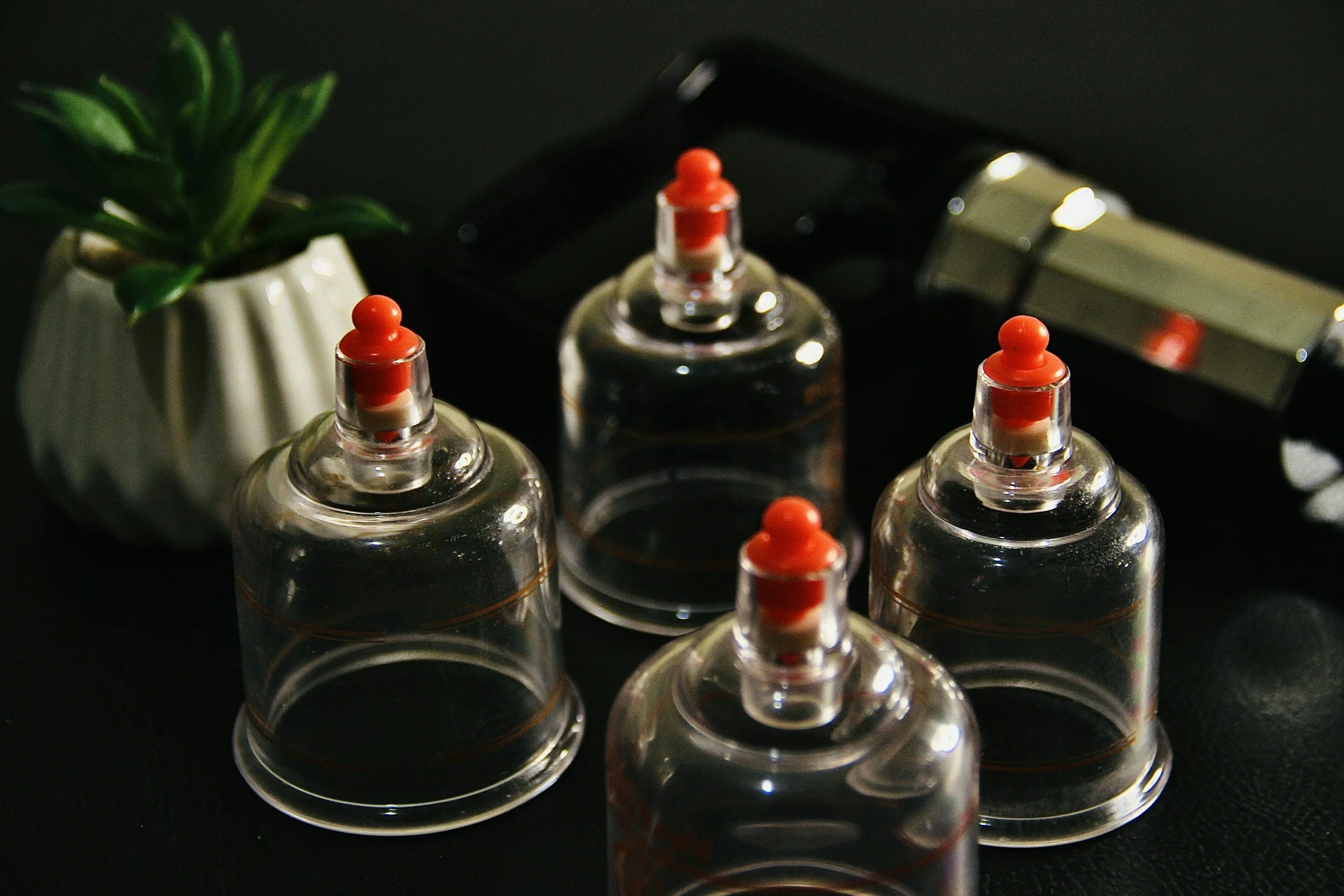
Cupping in Overland Park, close to Lenexa
At Grace Family Acupuncture on West 98th Terrace in Overland Park, cupping is performed by Dr. Jing Gong, DAOM, Dipl. O.M., L.Ac., a fifth-generation Traditional Chinese Medicine practitioner and board-certified acupuncturist. Acupuncture visits are a full 60 minutes, one-on-one, and cupping can be added to them or booked on its own, for patients across Overland Park, Leawood, Olathe, Prairie Village, and nearby Lenexa.
Here is what happens next:
Book your consultation online through our secure scheduling system, choosing cupping on its own or with acupuncture.
Complete a first visit with a full health history and an assessment of your neck, shoulders, and headaches.
Receive a personalized plan that pairs cupping and acupuncture where your pattern calls for both.
Begin treatment, with the plan adjusted as the tension and the headaches ease.
Book your consultation online and work on the neck tension behind your headaches.
Frequently asked questions
-
On the muscular back of the neck and the shoulders, with a trained practitioner, cupping is generally well tolerated. Cups should not go on the front or sides of the throat, on the scalp, or over damaged skin.
-
Cupping can ease the neck and shoulder tension that feeds tension-type and neck-driven headaches. The research we rely on looks at neck pain rather than headaches, so we use it alongside acupuncture rather than as a stand-alone headache treatment.
-
The marks generally fade over several days, although the time varies. They come from suction, not from cutting the skin.
-
Yes. Cupping is available as its own appointment, or alongside acupuncture when your pattern calls for both.
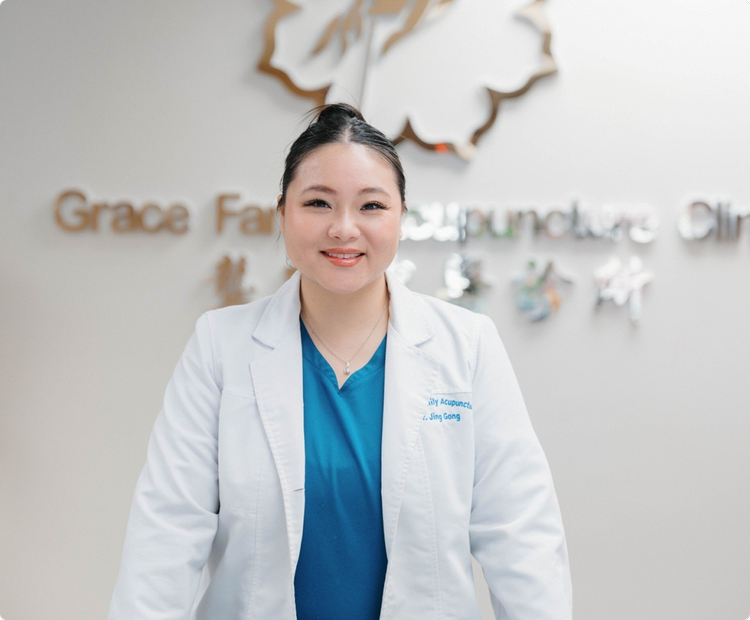
Dr. Jing Gong, DAOM, L.Ac., Dipl. O.M. (NCBAHM),
is the Managing Director and Principal Clinician of the practice. Born into a five-generation family of esteemed Traditional Chinese Medicine (TCM) practitioners, she seamlessly blends her rich ancestral lineage with her Doctorate in Acupuncture & Oriental Medicine. Dr. Gong's integrative approach combines ancient Chinese medical wisdom, modern Western knowledge, and energy medicine to identify the root causes of imbalance. Having treated thousands of patients, she provides precise, holistic care for the body, mind, and spirit, ensuring every visit is deeply restorative and empowering.