
Can Acupuncture Help Neuropathy? What Diabetic and Chemo Patients Should Know
Yes, acupuncture can help many people with peripheral neuropathy, mainly by easing the burning, tingling, and numbness rather than reversing the nerve damage itself. The evidence is strongest for chemotherapy-induced neuropathy, where major cancer centers now offer acupuncture, and more limited but promising for diabetic neuropathy. It is drug-free and low-risk, and it works as a complement to your medical care.
If your feet burn and tingle from diabetes or chemotherapy, and medication has not been enough, here is an honest look, from our clinic in Overland Park and serving the greater Kansas City metro, at what acupuncture can and cannot do for each situation, and what to expect.
The quick version:
Acupuncture targets the symptoms of neuropathy, the burning, tingling, and numbness, not the underlying nerve damage.
The evidence is strongest for chemotherapy-induced neuropathy and is recognized by major cancer centers.
For diabetic neuropathy the evidence is more limited, though many patients report meaningful relief.
It is a complement to your endocrinology or oncology care, not a replacement for it.
What peripheral neuropathy feels like
Peripheral neuropathy is damage or dysfunction in the nerves that serve your hands and feet. It usually starts in the toes and feet, often in a "stocking" pattern on both sides, and can include burning or shooting pain, pins-and-needles tingling, numbness, or a strange sensitivity where even a bedsheet feels uncomfortable. For many people the worst of it arrives at night.
Because the feet can lose protective sensation, neuropathy is not only uncomfortable, it raises the risk of unnoticed injuries, which is one reason it is worth taking seriously and treating alongside your doctor.
How does acupuncture calm nerve pain and support circulation?
Acupuncture appears to help neuropathy through a few mechanisms: it modulates how pain signals are processed in the nervous system, it improves local blood flow to the affected nerves and tissues, and it calms the overall stress and inflammatory load that can make nerve pain louder. In Traditional Chinese Medicine, neuropathy is often read as Qi and Blood deficiency failing to nourish the limbs, frequently with underlying Kidney and Liver Yin depletion in diabetic cases, and, in long-standing cases, blood stasis obstructing the fine collaterals (the Luo), which is the deeper target the needling works on. Treatment is built around that specific pattern.
What acupuncture does not do is regrow badly damaged nerves or undo diabetes or chemotherapy. The honest goal is symptom relief and better daily function, which for this group of patients can still be a meaningful change.
Acupuncture for diabetic neuropathy
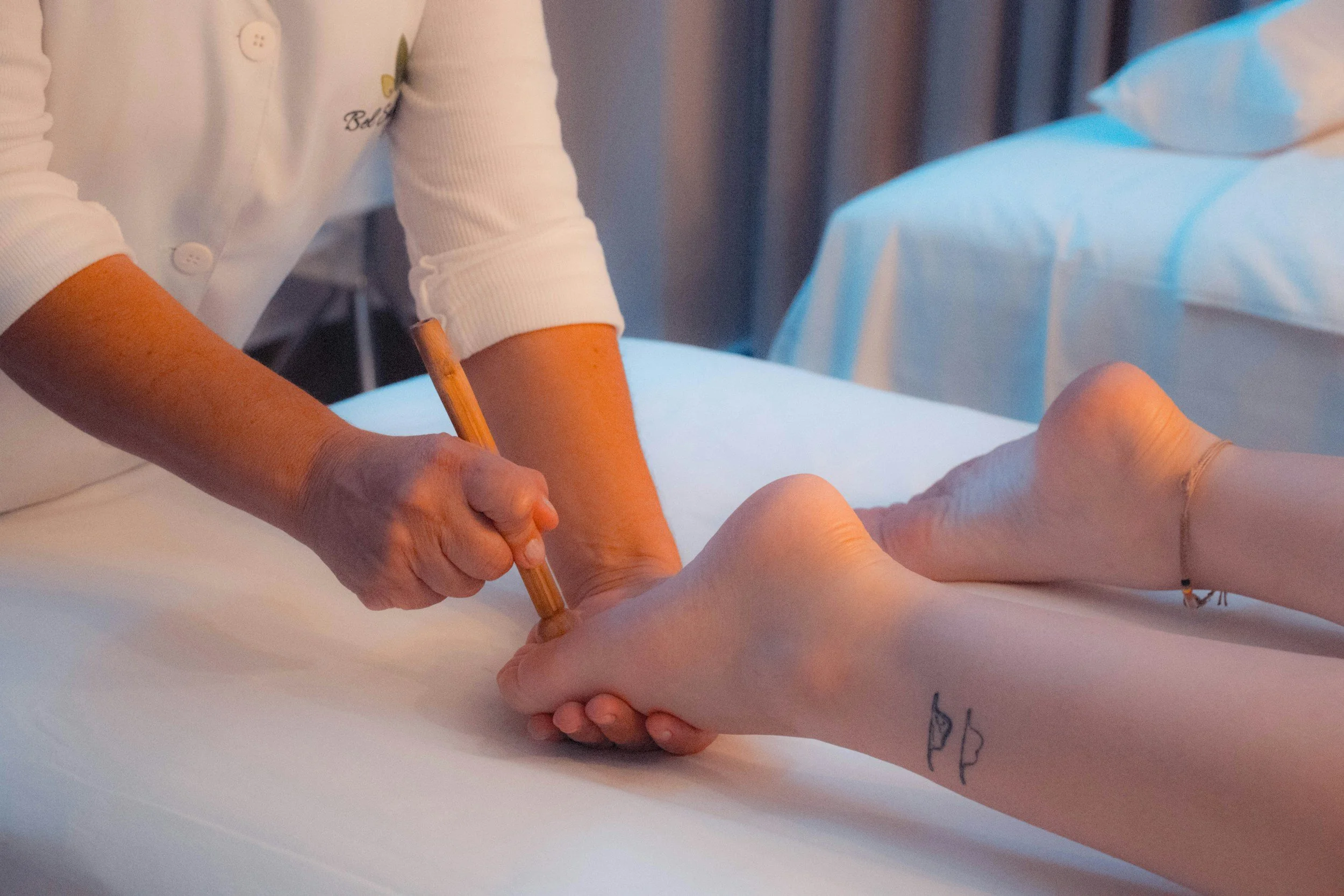
For diabetic peripheral neuropathy, the research is still developing, and the results are mixed, so any honest answer has to be measured. That said, a number of patients find acupuncture eases the burning and tingling in the feet and helps them sleep, and its strong safety profile makes it a reasonable option to try when medication is incomplete or its side effects are hard to tolerate.
One thing acupuncture never replaces here is blood-sugar control. Keeping glucose well managed is the single most important thing for diabetic nerves, and acupuncture sits alongside that work, not in place of it.
Acupuncture for chemotherapy-induced neuropathy
This is where the evidence is strongest. For chemotherapy-induced peripheral neuropathy, which can persist long after treatment ends, integrative oncology guidelines support offering acupuncture as an option, and many major cancer centers now include it for exactly this symptom. Because the conventional medication choices for this kind of nerve pain are limited and often poorly tolerated, a drug-free option with a good safety record is genuinely valuable.
To be completely clear, we do not provide cancer treatment. We support patients navigating the lingering nerve symptoms that chemotherapy can leave behind, working alongside your oncology team rather than in place of it.
Here is how the two situations compare at a glance:
| Diabetic neuropathy | Chemotherapy-induced neuropathy | |
|---|---|---|
| Evidence for acupuncture | Limited and mixed, but promising | Stronger; supported by integrative oncology guidelines |
| Main goal | Ease burning and tingling, support sleep | Ease persistent post-treatment nerve symptoms |
| Must continue | Blood-sugar management with your doctor | Care with your oncology team |
| Acupuncture's role | Drug-free complement | Drug-free complement |
What the research and cancer centers say
To put it plainly: integrative oncology guidelines list acupuncture as an option for chemotherapy-induced peripheral neuropathy, citing a favorable balance of likely benefit against very low risk, and leading cancer centers offer it as part of supportive care. For diabetic neuropathy the evidence base is smaller and less settled. The responsible framing across both is the same: a low-risk, drug-free therapy that may ease symptoms, used alongside medical care, with no promise of a cure.
How many sessions, and what to expect
Neuropathy is generally treated as a course. Most people are seen weekly at first, often for several weeks, before judging the response, because nerve symptoms tend to shift gradually rather than overnight. Your first visit is a full 60 minutes: a complete history, a look at how and when your symptoms behave, and a Traditional Chinese Medicine assessment before any needling.
If you are nervous about the needles, this is worth hearing. You lie down comfortably, and because many points for foot neuropathy are on the lower legs and feet, easy-to-remove footwear helps. The needles are solid and very fine, tapped in through a thin guide tube, nothing like an injection; most people feel a small prick at most, then a dull heaviness rather than sharp pain. If you are not seeing a meaningful change after a fair trial, we will tell you, rather than book you in indefinitely. Current per-session pricing is on our online booking page
Common questions about acupuncture for neuropathy
-
It can help many people by easing the burning, tingling, and numbness. It targets the symptoms, not the underlying nerve damage, and works best alongside your medical care.
-
Yes, the feet are the most common site treated, with points on the feet and lower legs aimed at the burning and tingling that often peaks at night.
-
The evidence is limited and mixed, but many patients report real relief. It never replaces blood-sugar control, which remains the most important factor for diabetic nerves.
-
This is where the evidence is strongest. Integrative oncology guidelines support offering acupuncture for chemotherapy-induced neuropathy, and many cancer centers include it in supportive care
Neuropathy care in Overland Park
At Grace Family Acupuncture on West 98th Terrace in Overland Park, neuropathy care is provided by Dr. Yang Gong, DTCM, L.Ac., whose clinical background in China included work in oncology-support settings, and Dr. Jing Gong, DAOM, L.Ac., a fifth-generation, board-certified acupuncturist. We position this care as a local complement to your endocrinology or oncology team across Overland Park and the greater Kansas City metro, and you can see our broader acupuncture for pain relief approach for the conditions we treat.
Here is what happens next:
Book your consultation online through our secure scheduling system.
Complete a 60-minute first visit with a full health history and a Traditional Chinese Medicine assessment.
Receive a personalized plan, coordinated to sit alongside your medical care.
Begin treatment, with the plan reassessed after a fair trial.
Book your consultation online and ask whether acupuncture is a reasonable addition to your neuropathy care.
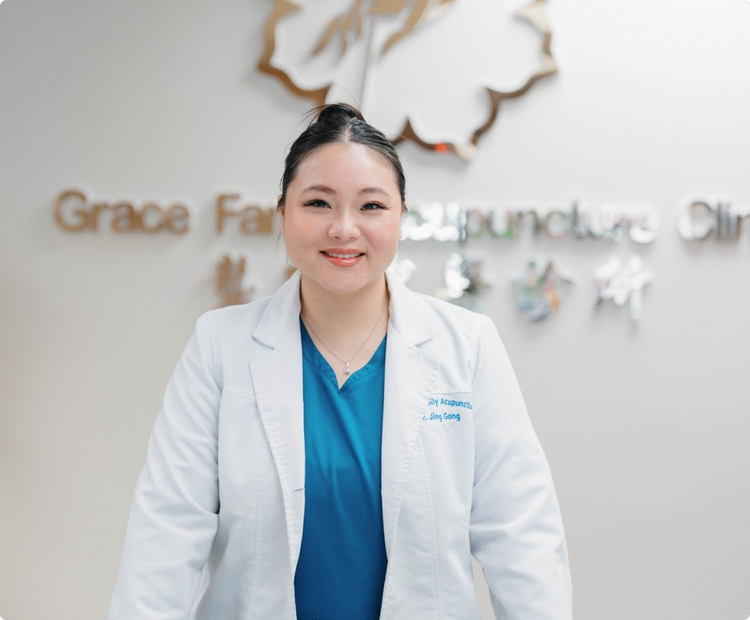
Dr. Jing Gong, DAOM, L.Ac., Dipl. O.M. (NCBAHM),
is the Managing Director and Principal Clinician of the practice. Born into a five-generation family of esteemed Traditional Chinese Medicine (TCM) practitioners, she seamlessly blends her rich ancestral lineage with her Doctorate in Acupuncture & Oriental Medicine. Dr. Gong's integrative approach combines ancient Chinese medical wisdom, modern Western knowledge, and energy medicine to identify the root causes of imbalance. Having treated thousands of patients, she provides precise, holistic care for the body, mind, and spirit, ensuring every visit is deeply restorative and empowering.