
Acupuncture vs Dry Needling for Pain: What Is the Difference?
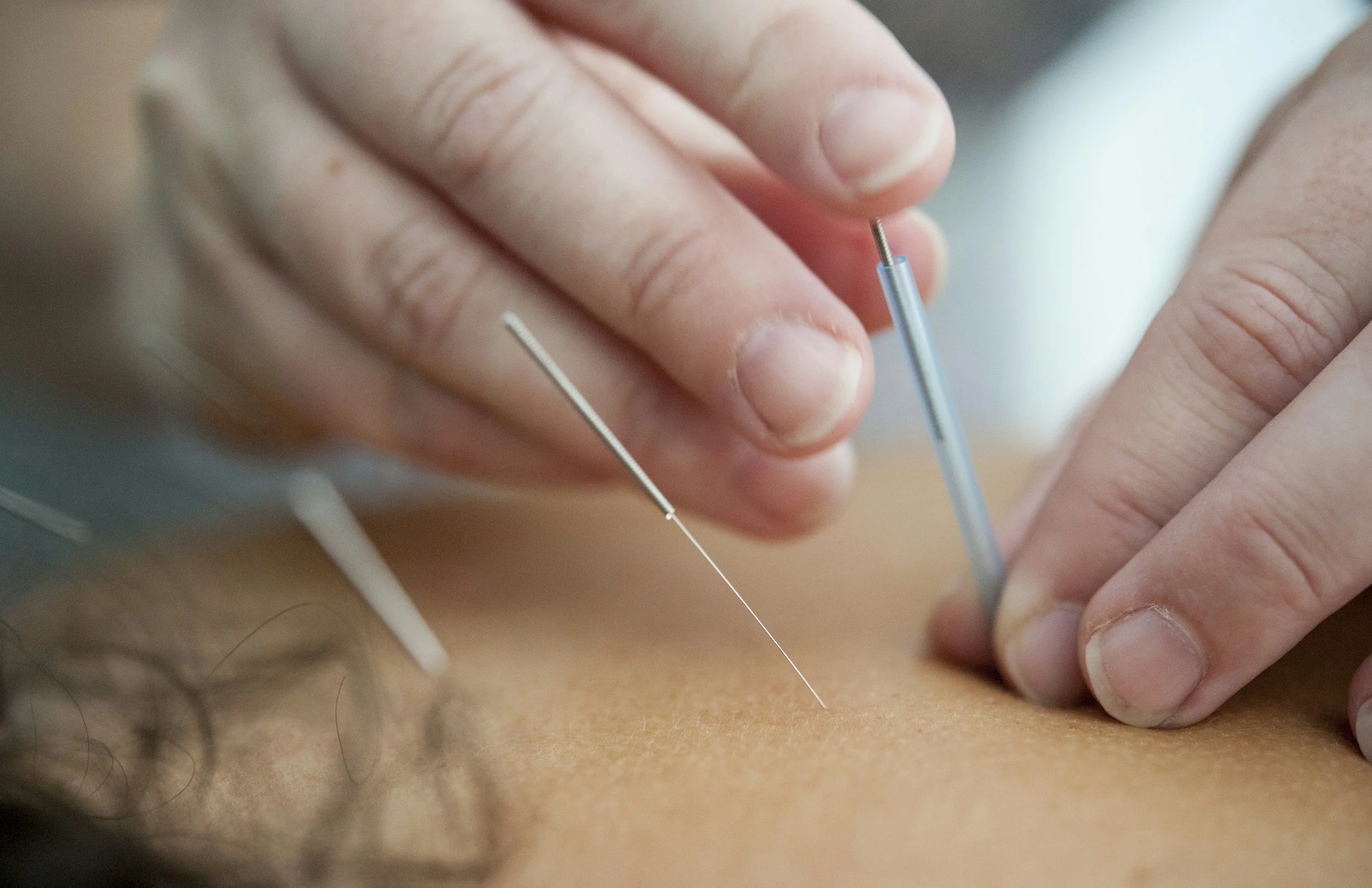
Acupuncture and dry needling both use thin needles (the same fine, solid filiform needles, not the hollow needles used for injections), but they are not the same thing. Acupuncture is a complete medical system performed by licensed acupuncturists who train for thousands of hours. Dry needling is a single technique, usually performed by physical therapists after a much shorter certification, that targets tight muscle "trigger points." Both can help muscular pain; the real differences are scope and the depth of training behind the needle.
This guide lays out those differences fairly, because the choice depends on what is actually wrong, and then explains where a full acupuncture clinic fits in.
The quick version:
Same tool, different systems: both use the same hair-thin needles, but acupuncture is a whole-body medicine and dry needling is one muscular technique.
Training is the biggest gap: licensed acupuncturists complete thousands of supervised hours; dry needling is typically a short continuing-education certificate.
For an isolated muscle knot, dry needling can work well. For pain with a broader cause, full acupuncture addresses more.
Both are safe in trained hands.
What each one is, and where it comes from
Acupuncture is a complete system of medicine with a long clinical history. A licensed acupuncturist diagnoses a pattern across the whole body, then places needles at specific points along the body's channels to influence pain, circulation, and the nervous system. It treats far more than muscles.
Dry needling is a modern Western technique. It uses the same type of needle but is built on myofascial trigger-point theory: the practitioner needles tight, ropey knots in a muscle to get them to release. It is focused, useful, and narrower in scope, aimed almost entirely at musculoskeletal pain.
It is worth clearing up one common misconception: needling a tight muscle knot is not unique to dry needling. Acupuncture has needled local tender points, known in Traditional Chinese Medicine as Ashi points, for thousands of years. Releasing the knot is a baseline part of an acupuncture treatment, which then goes further to address the pattern driving it. In that sense, dry needling is closer to one technique drawn from a much larger system than a separate discipline.
It is worth being fair here. Dry needling is a legitimate tool that can give real relief for a specific muscle problem. The point of this comparison is not to dismiss it, but to help you match the approach to your actual issue.
How the techniques actually differ
| Acupuncture | Dry needling | |
|---|---|---|
| What it is | A complete medical system | A single muscular technique |
| Who performs it | A licensed acupuncturist (L.Ac.) | Usually a physical therapist or chiropractor |
| Based on | Whole-body diagnosis, points, and channels | Western myofascial trigger-point theory |
| Needle used | Hair-thin filiform needle | The same hair-thin filiform needle |
| Treats | Pain plus broader and systemic conditions | Mainly muscular and myofascial pain |
| Typical course | A planned series of sessions | Often added within a physical-therapy plan |
Training and credentials: who is doing the needling
This is the difference most patients never hear about, and it matters most for safety and results.
A licensed acupuncturist in the United States completes roughly 1,900 to 2,600 hours of accredited graduate training, including anatomy, needle depth and angle by body region, sterile technique, and hundreds of hours of supervised clinical practice, and must then pass national board examinations and a separate clean-needle-technique certification before treating anyone unsupervised.
Dry needling, by contrast, is usually added by a physical therapist through a continuing-education certificate, commonly in the range of 25 to 80 hours. That is enough to learn the technique, but it is a fraction of the anatomy and needling training behind a licensed acupuncturist. Neither fact is an insult; it is simply what each credential involves, and it is fair to know before someone puts a needle in you.
Which is better for back pain, sciatica, and muscle tension?
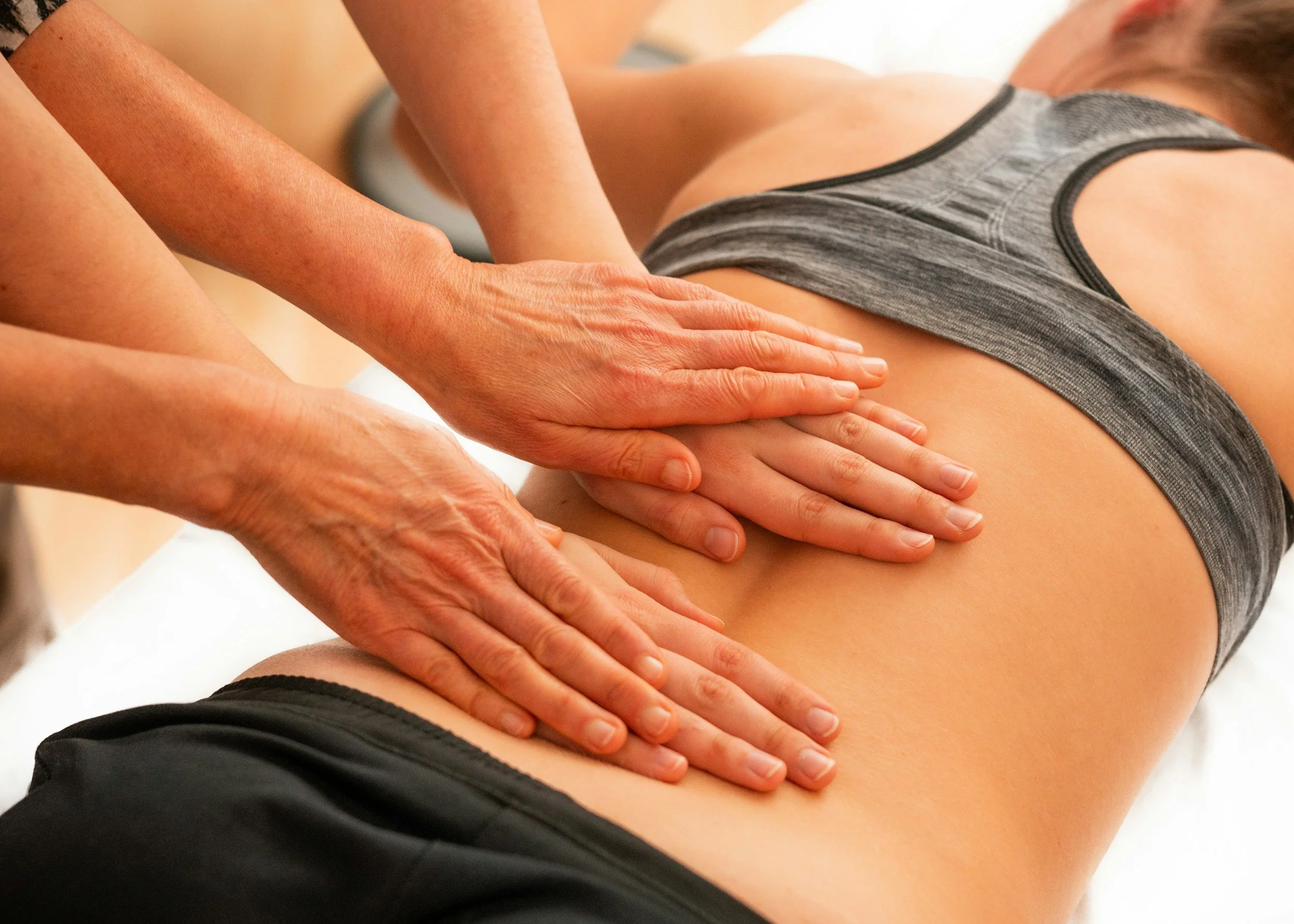
It depends on what is driving the pain.
A single, isolated muscle knot, such as a tight spot after a workout: either approach can release it, and dry needling can be a quick, effective option for that narrow job.
Back pain or sciatica with more going on, nerve involvement, posture, stress, a recurring pattern: full acupuncture is built to address the broader picture, not just the knot. Our guide to acupuncture for back pain walks through how that works.
Stubborn, recurring muscle tension that keeps coming back: the whole-body, root-cause approach of acupuncture tends to hold longer than chasing the same trigger point repeatedly.
In short, dry needling treats a muscle. Acupuncture treats the person the muscle belongs to.
Is acupuncture or dry needling safer?
Both are safe when performed by a properly trained provider. The needles are the same, and serious side effects are rare with either. The honest caveat is that needling near the chest, upper back, or neck carries a small risk if done without thorough anatomical training, which is exactly the kind of training that fills those thousands of acupuncture hours. Whoever you choose, the safety question is really a training question.
What to expect with acupuncture at our Overland Park clinic
At Grace Family Acupuncture on West 98th Terrace in Overland Park, care is provided by Dr. Yang Gong, DTCM, L.Ac., and Dr. Jing Gong, DAOM, L.Ac., a fifth-generation, board-certified acupuncturist, in full 60-minute, one-on-one visits.
Here is the honest case for that hour. The extra time is the product, not padding. A 15-minute trigger-point session can loosen the muscle in front of you; a full visit asks what posture, nerve pattern, stress, or imbalance keeps tightening it, and treats that too. That is the difference between relief that fades by the weekend and relief that holds. Rather than needling a single knot, the visit starts with a full assessment of what is driving your pain, then a plan built around it. You can explore our acupuncture treatments and our wider pain relief approach for patients in Overland Park and throughout Johnson County.
Common questions
-
No. They use the same needle, but acupuncture is a complete medical system and dry needling is a single technique for muscle trigger points, performed by different practitioners with very different training.
-
For an isolated muscle knot, dry needling can help. For back pain with a broader cause, full acupuncture addresses more of the picture.
-
Both are safe in trained hands. The safety difference comes down to depth of anatomical and needling training, where licensed acupuncturists have substantially more.
-
Yes, both use the same hair-thin, solid filiform needles.
Book a consultation online
If you have been weighing the two, here is what a consultation looks like:
Book your consultation online through our secure scheduling system.
Complete a 60-minute first visit with a full assessment of what is causing your pain.
Receive a personalized acupuncture plan, not a one-size needle.
Begin treatment, with the plan adjusted as you improve.
Book your consultation online and get a full assessment, not just a needle in a knot.
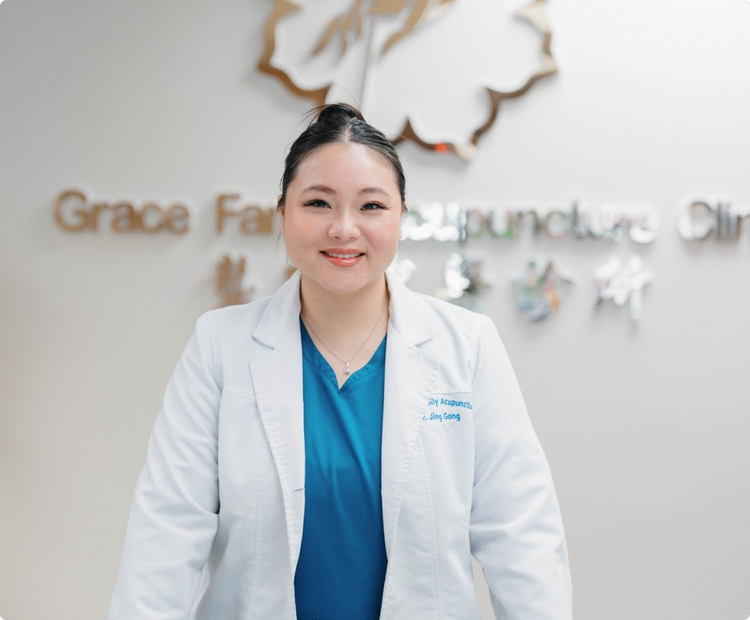
Dr. Jing Gong, DAOM, L.Ac., Dipl. O.M. (NCBAHM),
is the Managing Director and Principal Clinician of the practice. Born into a five-generation family of esteemed Traditional Chinese Medicine (TCM) practitioners, she seamlessly blends her rich ancestral lineage with her Doctorate in Acupuncture & Oriental Medicine. Dr. Gong's integrative approach combines ancient Chinese medical wisdom, modern Western knowledge, and energy medicine to identify the root causes of imbalance. Having treated thousands of patients, she provides precise, holistic care for the body, mind, and spirit, ensuring every visit is deeply restorative and empowering.