
Why Do My Joints Suddenly Ache? Acupuncture for Menopause-Related Joint Pain
If your joints started aching seemingly overnight in your mid-40s or 50s, with stiffness in the morning and a deep soreness that seems to move around, you are not imagining it, and it is probably not "just getting older." There is a real, recently named reason for it, and it is tied to your hormones.
Here is the short answer. Falling estrogen during perimenopause drives a pattern of widespread joint pain that researchers now call the musculoskeletal syndrome of menopause. It affects a majority of women through the transition. Acupuncture will not replace your estrogen, but it is a drug-free option with a strong record for menopausal symptoms and a useful role in easing the aches and stiffness, and it is one part of a plan that actually fits this stage of life.
The quick version:
Estrogen helps keep inflammation and joints in check; when it falls in perimenopause, joint pain often follows.
More than 70 percent of women experience musculoskeletal symptoms in the menopause transition, so this is common, not rare.
Menopause joint pain tends to migrate between joints, which helps distinguish it from a single arthritic joint.
Acupuncture is a drug-free way to take the edge off, best used as part of a broader plan.
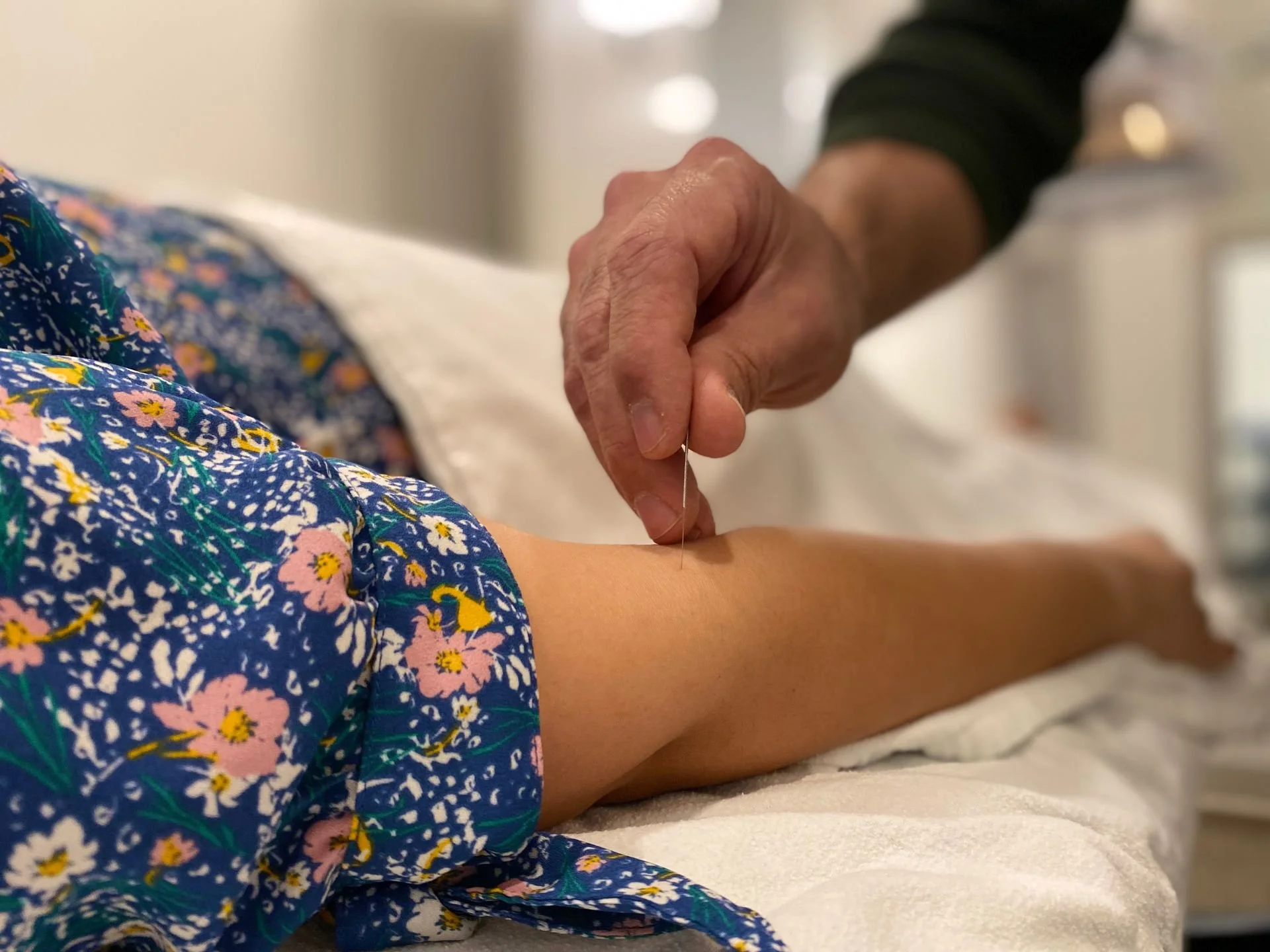
The hormone connection: why joints hurt during perimenopause
Estrogen does far more than regulate the menstrual cycle. It acts as one of the body's natural anti-inflammatory regulators and helps maintain cartilage, tendons, and the tissues around your joints. As estrogen levels fall and swing during perimenopause, that protective effect fades, inflammation rises more easily, and joints that were quietly fine for decades start to ache, stiffen, and complain.
This is why the timing feels so abrupt and so confusing. The pain often appears without any injury, shows up in several places at once, and does not match the picture most people have of "wearing out one knee." It is a hormonal shift expressing itself through your joints.
Menopause joint pain vs arthritis: how to tell
They can overlap, but the pattern usually differs.
| Menopause-related joint pain | Osteoarthritis | |
|---|---|---|
| Where | Migrates, often several joints, both sides | Usually fixed in specific overused joints |
| Timing | Appears around perimenopause, no injury | Builds slowly over years, often with wear |
| Stiffness | General, worse in the morning, eases with movement | Localized, worse with use of that joint |
| Other clues | Comes with other menopausal changes | Tied to a known joint history |
This distinction matters, because if your aching is hormonal and migrating rather than a single worn joint, the plan should address the whole picture, not just one knee. One important caution: if your joints are hot, visibly swollen, and stiff for more than an hour every morning, especially in a symmetrical pattern in the hands and wrists, that can point to an autoimmune arthritis such as rheumatoid arthritis rather than the menopause pattern, and it deserves a rheumatology workup. We cover that difference in our guide to acupuncture for rheumatoid arthritis.
How does acupuncture ease hormone-related joint pain and stiffness?
Honesty first: acupuncture has its strongest evidence for menopausal symptoms such as hot flashes, and more modest evidence for musculoskeletal and joint pain. It has not been studied specifically for menopause-related joint pain, and no responsible clinic should claim it reverses the hormonal change itself.
What it does offer is real. Acupuncture works at the level of regulation: it can help calm the heightened inflammatory and stress response that makes perimenopausal joints so reactive, improve local circulation to stiff areas, and support better sleep, which is often wrecked in this stage and which amplifies pain. In Traditional Chinese Medicine, this picture is often understood as a decline in Liver and Kidney Yin and Blood. Because the Liver is said to govern the sinews and tendons and the Kidney to govern the bones, that decline leaves the joints poorly nourished, and the internal dryness and stagnation that follow show up as the stiffness and ache you feel. Treatment is built around your specific pattern rather than a single protocol. The goal is to take the sharp edges off and improve how you function day to day, drug-free.
What else helps: movement, herbal support, and sleep
Acupuncture works best here as one part of a plan, not a standalone fix:
Movement: regular strength and mobility work directly protects joints and muscle as estrogen falls. This is non-negotiable at this stage.
Sleep: protecting sleep lowers your pain sensitivity, and acupuncture often helps with the sleep disruption itself.
Herbal and nutritional support: our clinic offers Chinese herbal medicine and TCM nutrition, which can be tailored to support you through the transition.
Talk to your doctor about hormone therapy: for many women it is the most direct treatment for this syndrome, and acupuncture can sit comfortably alongside it.
What to expect from treatment
Your first visit is a full 60 minutes. The doctor takes a complete history, including where your joints hurt, how it tracks with your cycle or menopausal changes, and how you are sleeping, then identifies the pattern before building a plan. Most people are seen weekly at first, then taper. Because the underlying driver is hormonal and ongoing, lasting relief usually comes from a steady course plus the lifestyle pieces above, and we reassess rather than booking you in indefinitely. Current per-session pricing is on our online booking page.
Common questions about menopause joint pain
Why do my joints suddenly hurt in menopause? Because estrogen helps control inflammation and maintain joint tissues. As it falls during perimenopause, that protection fades and joints that were fine for years begin to ache, often in several places at once.
Is joint pain normal during perimenopause? Yes. More than 70 percent of women experience musculoskeletal symptoms through the menopause transition. Common does not mean you have to simply live with it.
Can acupuncture help menopause joint pain? Acupuncture does not replace estrogen and has not been tested specifically for menopause joint pain, but it has a strong record for menopausal symptoms and a useful role in easing aches, stiffness, and the poor sleep that worsens pain.
Should I treat this with acupuncture alone? No. It works best as part of a plan that includes strength and mobility work, sleep, and a conversation with your doctor about hormone therapy.
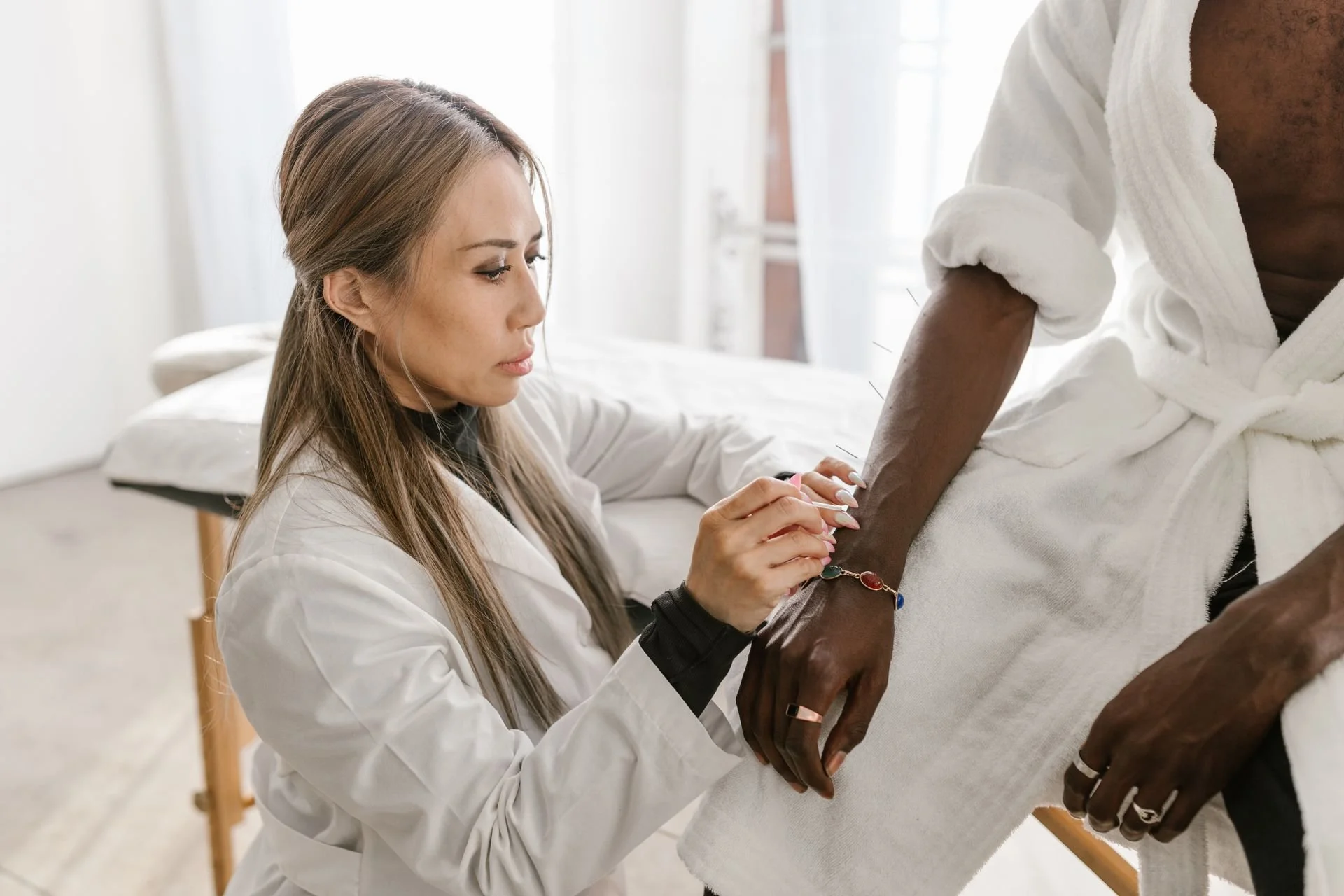
Relief for menopause joint pain in Overland Park
At Grace Family Acupuncture on West 98th Terrace in Overland Park, this care is provided by Dr. Yang Gong, DTCM, L.Ac., and Dr. Jing Gong, DAOM, L.Ac., a fifth-generation, board-certified acupuncturist and herbalist. Visits are a full 60 minutes, one-on-one and drug-free, for women in Overland Park, Leawood, and across Johnson County. You can see our broader acupuncture for pain relief approach for the conditions we treat.
If your body has felt like a stranger lately, you deserve to be taken seriously rather than told it is just age. Here is what happens next:
Book your consultation online through our secure scheduling system.
Complete a 60-minute first visit with a full health history and a Traditional Chinese Medicine assessment.
Receive a personalized plan that treats the whole picture, joints, sleep, and stress together.
Begin treatment, with the plan adjusted as you improve.
Book your consultation online and start treating the cause behind the aches, not just the soreness.
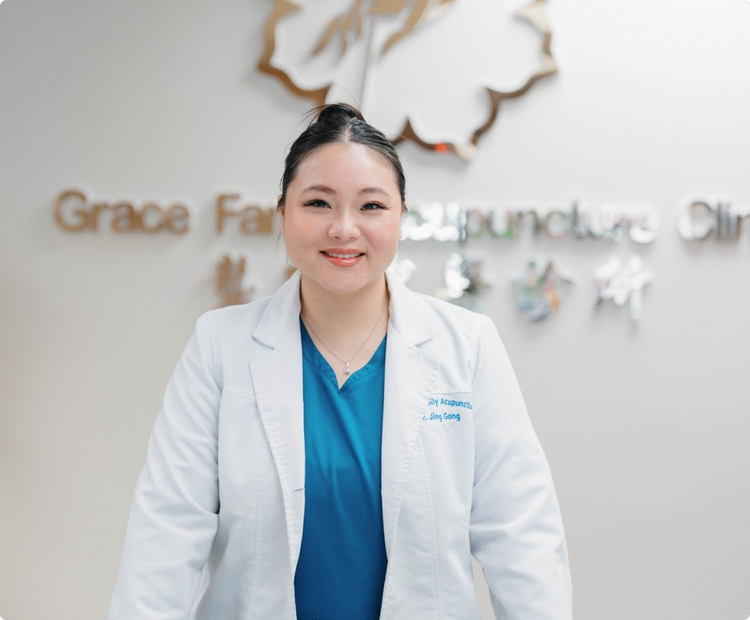
Dr. Jing Gong, DAOM, L.Ac., Dipl. O.M. (NCBAHM),
is the Managing Director and Principal Clinician of the practice. Born into a five-generation family of esteemed Traditional Chinese Medicine (TCM) practitioners, she seamlessly blends her rich ancestral lineage with her Doctorate in Acupuncture & Oriental Medicine. Dr. Gong's integrative approach combines ancient Chinese medical wisdom, modern Western knowledge, and energy medicine to identify the root causes of imbalance. Having treated thousands of patients, she provides precise, holistic care for the body, mind, and spirit, ensuring every visit is deeply restorative and empowering.