
What to Expect From Acupuncture for Pain Relief in Overland Park
Plenty of people booking their first acupuncture appointment for pain are not nervous about the needles. They are nervous about the unknowns nobody puts on a website: how many times will I have to come back, what is this going to cost me out of pocket, and will I actually feel anything different.
Here is the short answer before the detail. A typical course of acupuncture for pain runs about 6 to 12 sessions, usually starting once or twice weekly and tapering as you improve. Sessions at Grace Family Acupuncture are a full 60 minutes, and we are a private-pay clinic in Overland Park, so you get the whole hour one-on-one with a doctor instead of an insurance-driven rotation. Current per-session pricing is listed on our online booking page. The rest of this page walks through exactly what happens, how the course of care works, and how to think about the cost.
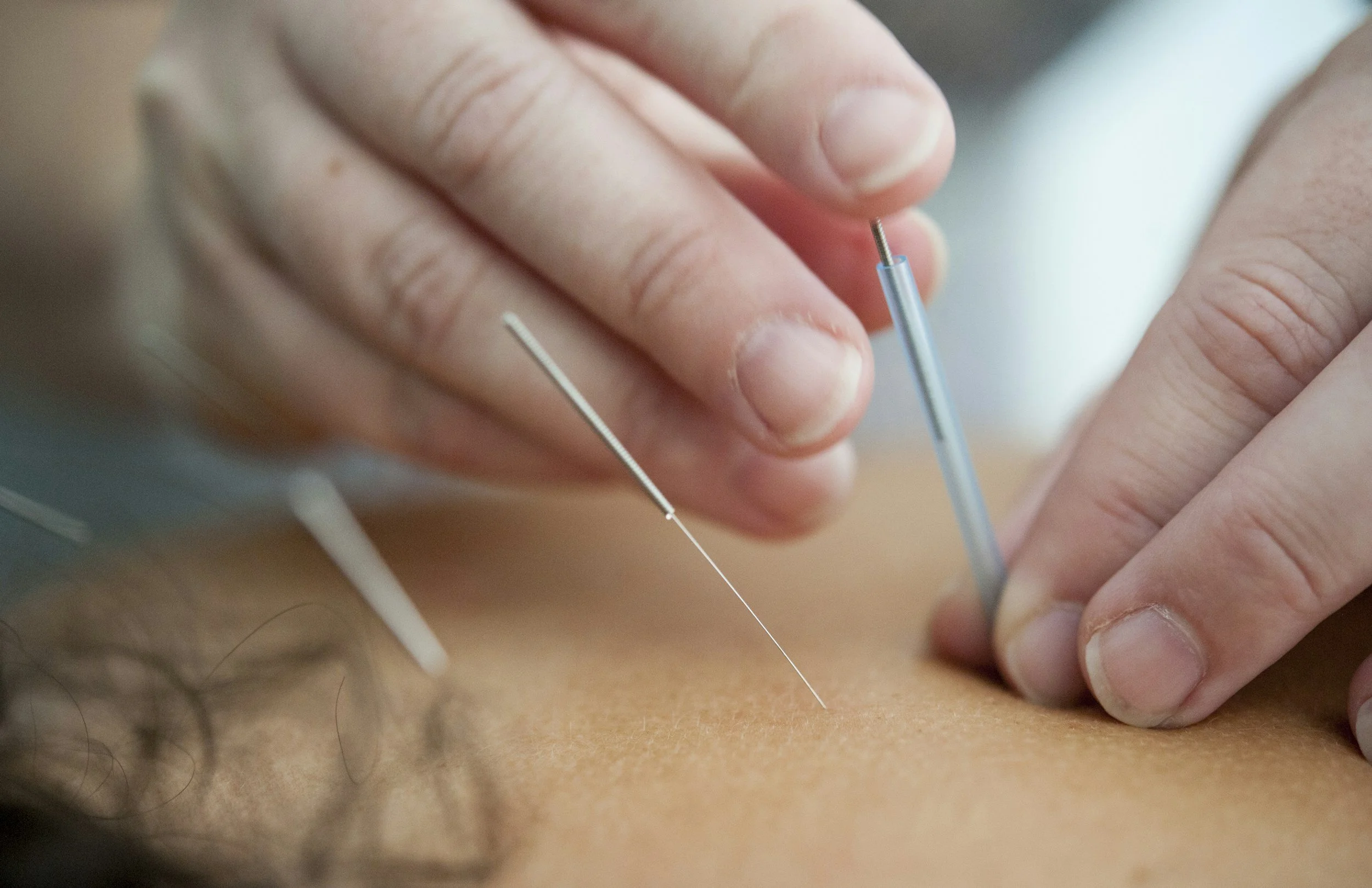
What happens in your first 60-minute session
Your first visit is not a quick poke-and-go. It is a full 60-minute session, and a large part of it is conversation. Dr. Yang Gong or Dr. Jing Gong reviews your full health history, asks how your pain behaves across a day, looks at the patterns Traditional Chinese Medicine pays attention to, such as your pulse and tongue, and only then builds a treatment plan around your specific condition. That depth of intake is the reason the visit is a full hour rather than fifteen minutes; it reflects how the doctors, who carry doctoral-level TCM training and five generations of family practice, were trained to work.
The needling itself takes up part of the hour, not all of it. Once the needles are placed, you rest with them in for a stretch of time while your nervous system settles. Most patients describe this part as surprisingly relaxing, and a fair number fall asleep on the table.
How many sessions most pain patients need
Acupuncture for pain is a course of care, not a single fix. In the research that clinical guidelines lean on, acupuncture is studied as a series of sessions rather than a one-off, and treatment courses commonly run in the range of 6 to 12 visits. A rough guide to how that tends to play out:
Acute, recent flare-ups (a tweaked back, a new bout of neck tension): often respond inside a handful of visits.
Long-standing chronic pain (years of low back pain, ongoing joint pain): usually needs the fuller 8 to 12 range, sometimes more, because patterns that built slowly unwind slowly.
Maintenance, once you are better: many patients drop to an occasional tune-up visit rather than stopping cold.
Why the spread? The number is driven by what we actually find on assessment, not a fixed package. Stress-held tension, which Chinese medicine reads as Liver Qi stagnation, is essentially stuck energy that needs moving, and it often shifts within a handful of visits. Deep, cold, achy joint pain is a Bi syndrome, a painful obstruction, where the work is warming the area and clearing the lodged dampness over time. That is slower by nature, so it asks for more sessions. After your consultation you get a plan with a realistic number attached, and that plan is adjusted as your function improves rather than left on autopilot.
A simple way to picture the course of care
Most pain plans move through three stages:
Symptom control. The early, more frequent visits focused on calming the pain and getting you sleeping and moving better.
Pattern resolution. Spacing visits out as we treat the underlying pattern driving the pain, not just the flare.
Maintenance. Occasional visits to hold your progress, on your terms.
What acupuncture for pain costs, and why we are a private-pay clinic
We do not bill insurance, and that is a deliberate choice, not a gap. Billing through insurance pushes many clinics toward short, high-volume visits built around what a plan will reimburse. Staying private-pay is what lets us give you the full 60-minute hour, one-on-one with a doctor, rather than a rotation of rooms.
In the interest of being upfront about money: we list our current first-visit and follow-up rates in full on our online booking page, so you can see exactly what you are committing to before you book. For national context, private acupuncture sessions in the United States commonly run roughly 80 to 150 dollars per visit, with first visits higher because they include the full intake and assessment.
The honest way to budget for acupuncture is not to anchor on a single visit. Think in terms of an initial course of care, because a few well-spaced sessions are what move chronic pain, and ask about that total when you book your consultation.
Does it hurt? What the needles actually feel like
Acupuncture needles are nothing like the hollow needles used to draw blood or give an injection. They are solid and very fine, and at our clinic we tap them in through a thin guide tube placed against the skin, which masks the initial prick. Most people are genuinely surprised by how little they feel on insertion.
What you may notice is a dull, heavy, or mildly tingling sensation around a point once the needle is in. In Chinese medicine this response has a name, and feeling it is generally taken as a sign the point is active. It is a world away from sharp pain. If anything ever feels too strong, you say so, and the needle is adjusted.
How soon you may feel relief
Honesty matters more than hype here. Some patients walk out of the first or second session noticeably looser, especially with muscular and tension-driven pain. Others, particularly those with deep-set chronic pain, feel the shift more gradually over the first several visits as the treatments build on each other.
What we will not do is promise a fixed number of sessions or a guaranteed cure. What we can tell you is that acupuncture for pain is cumulative, that the early visits are where we learn how your body responds, and that we track your progress visit to visit so you are not guessing whether it is working.
What most pain patients get wrong before they book
The most common mistake is treating acupuncture like a single experiment: book one visit, feel undecided, and never return. One session is a sample, not a treatment. The second mistake is waiting until the pain is unbearable, when a problem that took years to build will simply take longer to unwind. The third is assuming all needling is the same. The training behind who is holding the needle matters, which is worth understanding before you choose a provider, and we cover exactly how acupuncture differs from dry needling in a separate guide.
There is also a local pattern we see constantly: desk-bound office work across Johnson County quietly loading up the neck, shoulders, and lower back until a normal day turns into a flare. Pain that starts as posture is treatable, and earlier is easier.
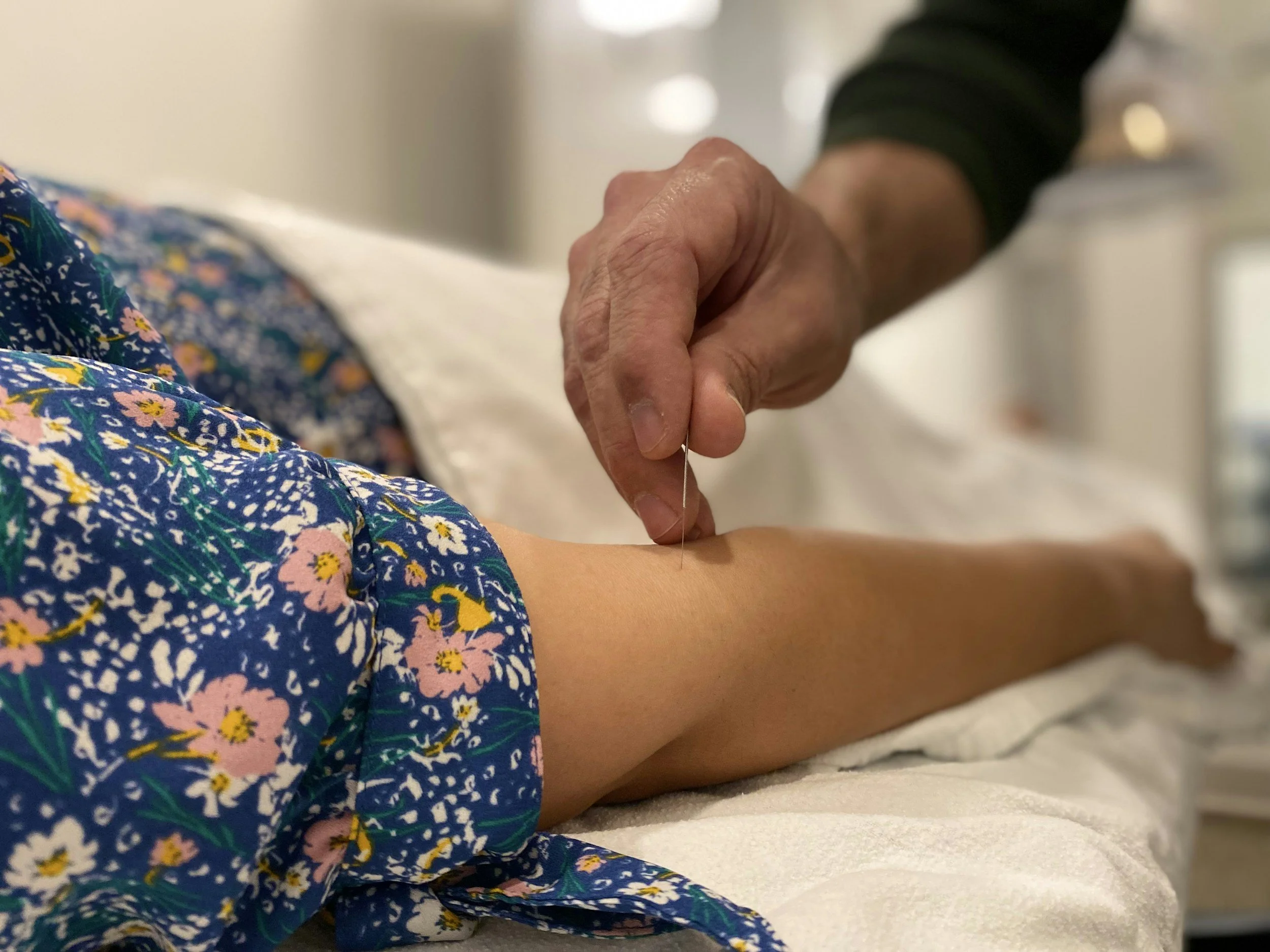
The pain conditions we treat
Grace Family Acupuncture provides drug-free pain care for back pain, sciatica, neck and shoulder tension, migraines and headaches, joint and arthritis pain, neuropathy, and whole-body conditions such as fibromyalgia, for patients across Overland Park and the wider Johnson County area. You can see the full picture of our acupuncture for pain relief approach and the conditions and specialties we treat. Many pain plans also draw on our other Traditional Chinese Medicine therapies, such as cupping and Chinese herbal medicine.
What happens next
Booking is simple, and it is done entirely through online scheduling:
Book your consultation online through our secure scheduling system.
Complete an initial 60-minute visit, including a full health history and a Traditional Chinese Medicine assessment.
Receive a personalized treatment plan with a realistic course of care for your specific pain.
Begin treatment, with your plan adjusted as your function improves.
If you have been putting off care because you did not know what you were walking into, now you do. Book your consultation online and start with a clear plan instead of a guess.