
Chinese Herbal Medicine
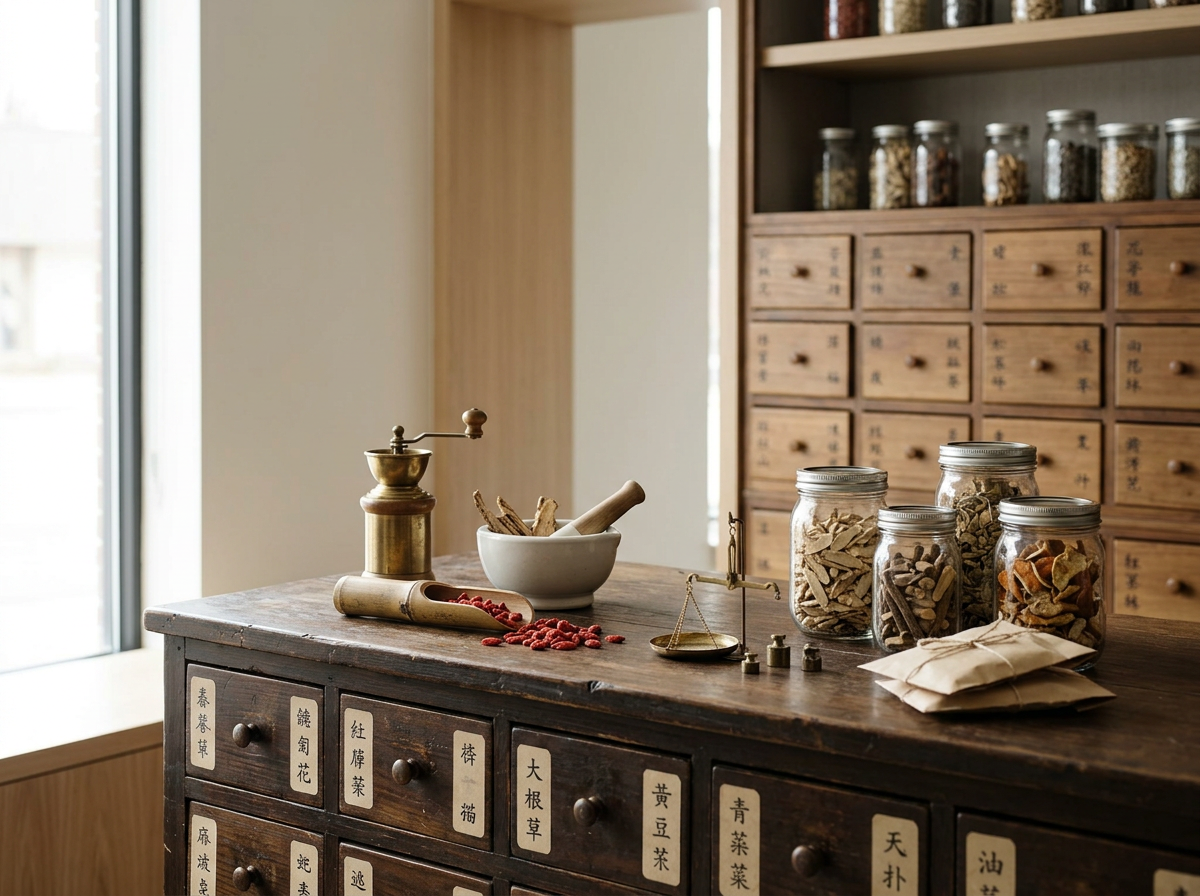
Chinese herbal medicine is a system of individualized plant- and mineral-based formulas, prescribed according to a person's specific Traditional Chinese Medicine pattern rather than a single diagnosis, and used to support conditions ranging from digestive and hormonal imbalance to low immunity and chronic skin conditions. At Grace Family Acupuncture and Holistic Medicine, an Overland Park, Kansas practice serving the area since 2002, herbal formulas are handled as their own dedicated consultation, separate from an acupuncture visit.
What Chinese herbal medicine actually treats
Traditional Chinese herbs are rarely prescribed one at a time. In practice, a formula is a combination of several herbs, chosen to work together and adjusted to the person taking them, which is why two people with the same complaint can walk out of a consultation with two different prescriptions. At Grace Family Acupuncture, personalized formulas are most commonly built around digestion and hormone balance, immunity and energy, and chronic skin conditions such as eczema and psoriasis, always framed as support for the underlying pattern rather than a single isolated symptom.
That pattern-first approach is the real distinction between Chinese herbal medicine and reaching for a single supplement off a shelf. A formula intended to calm digestive upset in one person may look nothing like a formula for the same complaint in someone else, because the underlying pattern, not the symptom label, is what the herbs are chosen to address.
How a formula is chosen: the TCM pattern approach
A Chinese herbal medicine consultation typically begins the same way an acupuncture intake does, with a conversation about the primary concern, along with sleep, digestion, energy, stress, and menstrual or hormonal history where relevant. Pulse and tongue diagnosis, two of the core diagnostic tools in Traditional Chinese Medicine, help identify which pattern is driving the presentation, for example a deficiency pattern that calls for a building, tonifying formula, or a stagnation pattern that calls for a moving, dispersing one. The formula is built from that pattern, not from the name of the condition alone, and it is common for a formula to be adjusted at a follow-up visit as the pattern shifts or resolves.
Does Chinese herbal medicine work?

This is the fair question, and it deserves an honest answer rather than a sweeping one. Chinese herbal medicine has been practiced and refined over a long documented history, and a real, if still developing, body of modern research has examined individual herbs and formulas for specific uses, with results that are genuinely mixed depending on the herb, the formula, and the condition studied. Some formulas and individual herbs have reasonable supporting research behind particular uses; others are supported mainly by centuries of clinical use within Traditional Chinese Medicine rather than by controlled modern trials. Herbal products sold in the United States are not evaluated by the Food and Drug Administration for treating, curing, or preventing disease, and a reputable practitioner should be transparent about that distinction rather than implying otherwise. The honest position is that Chinese herbal medicine is a reasonable complementary option to discuss with a licensed practitioner, not a guaranteed or a proven cure for any specific condition, and it works best as one part of a person's overall care rather than a replacement for medical treatment already in place.
Safety, side effects, and medication interactions
Chinese herbal medicine, prescribed by a trained practitioner and prepared from quality-controlled sources, is generally well tolerated. Mild digestive upset is the most commonly reported adjustment as the body responds to a new formula, and a practitioner will typically modify the formula in response rather than simply waiting for it to pass. Because herbs are biologically active substances, some can interact with prescription medications, including blood thinners and certain hormonal or immune-suppressing drugs, which is why a complete and honest medication list is part of a proper intake. Herbal formulas are not appropriate to start or stop without guidance, particularly during pregnancy, while breastfeeding, or alongside a significant new medication change, and a licensed practitioner should always be told about every medication and supplement a person is currently taking before a formula is prescribed.
Chinese herbal medicine compared with Western medicine
Chinese herbal medicine and Western pharmaceutical medicine are not competing answers to the same question so much as two different frameworks. Western medicine generally targets a specific diagnosis with a specific mechanism of action, tested through controlled trials designed around that one use. Chinese herbal medicine targets a broader pattern across multiple systems, drawing on individualized formulas refined over generations of clinical use, with a research base that is real but still developing compared to pharmaceutical research. Neither framework replaces the other, and the most defensible use of Chinese herbal medicine is alongside, not instead of, medical care a person already receives for a diagnosed condition.
What a Chinese herbal medicine consultation involves
Because Chinese herbal formulas are handled as their own consultation at Grace Family Acupuncture, rather than folded into an acupuncture appointment, the visit is built around enough time to take a full intake, perform pulse and tongue diagnosis, and discuss the reasoning behind the formula being recommended. Formulas may come in a few different forms depending on what fits the pattern and a person's lifestyle: raw herbs simmered at home into a decoction, concentrated granules that dissolve in hot water, or pre-made patent pills that require no preparation at all. Grace Family Acupuncture is a private-pay practice, and cost and format depend on the complexity of the formula and how the consultation is structured, so current details are best confirmed when scheduling.
FAQ
-
Chinese herbal medicine is a component of Traditional Chinese Medicine that uses individualized combinations of herbs, chosen according to a person's diagnosed pattern rather than a single symptom, to support conditions such as digestive and hormonal imbalance, low immunity, and chronic skin conditions.
-
Research on individual herbs and formulas is genuinely mixed, with some uses better supported than others, and Chinese herbal medicine is best approached as a reasonable complementary option discussed with a licensed practitioner rather than a proven cure for any specific condition.
-
When prescribed by a trained practitioner from quality-controlled sources, it is generally well tolerated, with mild digestive adjustment being the most common effect as a formula is fine-tuned.
-
Some herbs can interact with prescription medications, including blood thinners and certain hormonal or immune-suppressing drugs, which is why a complete medication list should always be reviewed with a licensed practitioner before a formula is prescribed.
-
Cost depends on the complexity of the formula and how the consultation is structured. Current pricing is best confirmed when scheduling a consultation
-
Western medicine generally targets a specific diagnosis with a single mechanism of action, while Chinese herbal medicine targets a broader pattern across multiple systems using individualized, multi-herb formulas, and the two are best used alongside each other rather than as substitutes.
Next steps in Overland Park
Grace Family Acupuncture and Holistic Medicine serves Overland Park, Leawood, Olathe, Lenexa, Prairie Village, and the greater Kansas City metro, and treats Chinese herbal medicine as its own dedicated consultation built around an individual's full pattern, not a shelf remedy matched to a single symptom. Schedule a consultation to discuss whether a personalized herbal formula makes sense alongside your current care.
Related reading: for herbal support specifically during perimenopause and menopause, see our guide to women's health acupuncture and herbal support. For herbal and acupuncture support for anxiety, depression, or insomnia, see our guides to stress, anxiety, and emotional wellness acupuncture.