
How Acupuncture Helps with Anxiety and Stress in Overland Park
Persistent anxiety does not always respond to medication alone. Grace Family Acupuncture in Overland Park, KS works with patients who want to treat what is driving their anxiety, not just manage the signal
Our practitioners bring five generations of TCM lineage, 30+ years of clinical experience, and more than 10,000 patients treated. Anxiety and stress-related conditions are among our most common presentations.
What Patients Say
“I wanted to share my positive experience with Grace Family Acupuncture practice over the past three months. Since I began my treatments, I have seen significant improvement in my overall health, specifically regarding my hormonal imbalances, hot flashes, and sleep. Dr. Gong is incredibly professional, knowledgeable, and attentive. I also truly appreciate how accessible and consistently responsive she is. Highly recommend!”
“We are so thankful to have found Grace Family Acupuncture. My daughter has been struggling with panic and anxiety disorder plus cluster migraines for years and it had become so debilitating that she was unable to make it through a full day of school. We’ve been going twice a week for a few months and I feel like I have my daughter back. We have weaned off all the meds for anxiety and headaches and she hasn’t had an episode in a few weeks now.”
“My experience at Grace Family Acupuncture exceeded my expectations. For my mental wellbeing, Dr. Jing suggested Tibetan singing bowls. I instantly felt my mind calm down as soon as she began. Fire cupping makes a noticeable difference upon release. I felt a relief of tension I haven’t felt even from chiropractors. If you’re needing a stress relief, mental or physical, this is the place to go.”
“In my first couple months of seeing Dr. Jing Gong weekly for acupuncture, cupping and dietary recommendations, the tightness in my pericardial fascia released, I no longer cough when I take a deep breath, my digestion is on track, and my nervous system is calmed. She has given me root-cause release in a very short time.”
Why Overland Park Patients Choose Acupuncture for Anxiety
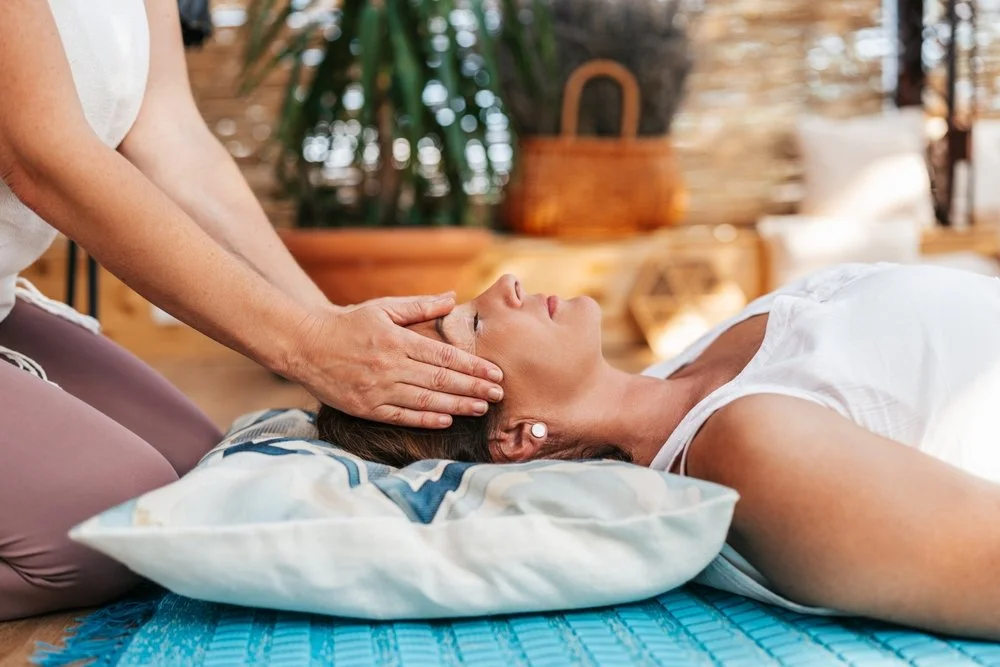
Many patients come after trying medication, therapy, or both, and finding that the relief is partial or comes with trade-offs they do not want long term. Johnson County's pace adds its own pressure: long commutes into Kansas City, overscheduled households, and a culture that treats staying busy as a virtue.
Acupuncture is not a replacement for those tools. It works on a different pathway. Medication modulates neurotransmitter levels. Therapy changes thought patterns. Acupuncture changes the state of the nervous system itself, moving the body out of sympathetic dominance (the fight-or-flight state most anxious people are stuck in) into parasympathetic activity, where repair and regulation happen.
Patients feel the shift during the session. Most describe it as the first time they have been genuinely calm in months.
Why this clinic over others in the Kansas City area:
Five generations of family TCM lineage means pattern recognition that is not built in a classroom. Dr. Yang Gong trained at Zhengzhou Zhongjing TCM College and practiced at a TCM hospital in Zhuhai before establishing this practice in the United States in 2002. Dr. Jing Gong holds a DAOM and is nationally certified through NCCAOM. Anxiety cases here are not handled with a generic protocol. Point selection is based on your specific intake findings and adjusted session by session.
How Acupuncture Calms the Nervous System
In Traditional Chinese Medicine, anxiety most commonly involves two organ systems: the Heart and the Liver.
The Heart in TCM governs the Shen, the faculty responsible for clear thinking, emotional stability, and restful sleep. When it is under strain, Shen becomes unsettled: racing thoughts, easy startling, and sleep that leaves you tired regardless of hours.
The Liver governs the smooth circulation of Qi. When it is congested by chronic stress or suppressed emotion, Qi stagnates. That stagnation produces the physical symptoms most anxious patients recognize: tight chest, jaw clenching, irritability, and a sense of being permanently coiled up.
Acupuncture points along the Heart and Pericardium meridians, particularly HT7 (Shenmen), PC6 (Neiguan), and GV20 (Baihui), anchor the Shen and circulate stagnant Qi. These correspond to anatomical locations where needle stimulation produces measurable effects on the autonomic nervous system, including reductions in cortisol and shifts in heart rate variability.
This is where TCM and Western physiology converge. The mechanism is described differently in each system. The clinical outcomes are consistent.
What the Research Shows
Multiple randomized controlled trials have found statistically significant reductions in anxiety scores from acupuncture compared to control groups, with some results comparable to benzodiazepine medication and without dependency risk. Separate research has shown measurable reductions in salivary cortisol after eight weeks of acupuncture treatment. The National Center for Complementary and Integrative Health (NCCIH) recognizes acupuncture as evidence-supported for stress-related conditions.
Acupuncture works on a different pathway than medication or talk therapy. That is exactly why it helps patients who have not gotten full relief from either.
What an Anxiety-Focused Session Looks Like
Your first appointment covers more ground than subsequent sessions. We take a detailed intake covering sleep quality, digestion, temperature sensitivity, emotional patterns, and physical symptoms you might not connect to anxiety, like neck tension or recurring headaches. These tell us which organ systems are involved and which points to prioritize.
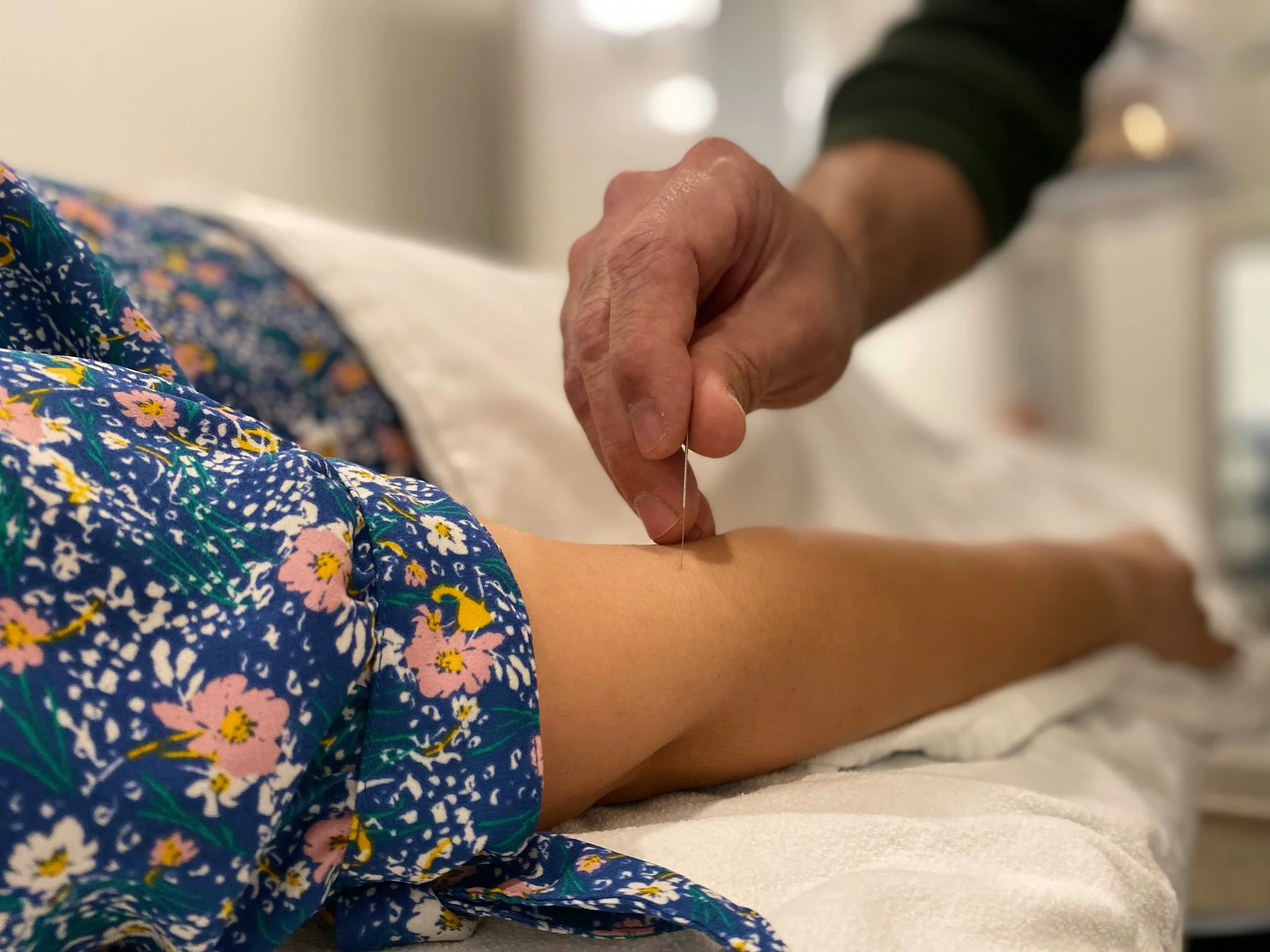
You lie on a treatment table, fully clothed except for the areas being needled, typically forearms, lower legs, the top of the head, and sometimes the sternum. The needles are single-use, sterile, and hair-thin. Most patients feel a brief dull ache or slight warmth at insertion, and then nothing. Within five to ten minutes, most are deeply relaxed. Some fall asleep.
Needles stay in for 20 to 30 minutes. We may also use ear seeds: small pellets at specific auricular points associated with the nervous system, so the treatment continues between sessions.
After the session, most patients feel calm and slightly spacey for an hour or two. Sleep is often noticeably better the same night.
What People Get Wrong About Acupuncture for Anxiety
They expect one session to resolve months of accumulated stress. Acupuncture changes the set-point of the nervous system over a course of treatment. Most patients notice real improvement by session three or four. Stopping after two because the result was not instant is the most common reason people underestimate it.
They assume it is a last resort. We see patients who lived with anxiety far longer than necessary before trying this. Acupuncture works well as a first-line approach, particularly for patients who want to avoid starting medication or who are pregnant with limited pharmaceutical options.
They separate the physical from the emotional. Anxiety is not only in the mind. Patients carry it in their shoulders, jaw, gut, and chest. Treating the body directly, not as a secondary effect of mental treatment, is why acupuncture produces results for patients who have done years of therapy and still feel physically reactive.
How Many Sessions Will You Need?
There is no single number that fits everyone. The pattern we see consistently:
Patients with mild to moderate anxiety that developed recently, within the past year or two, often stabilize within six to eight sessions and move to monthly maintenance. Patients with long-term generalized anxiety, especially when compounded by chronic sleep disruption, tend to need ten to twelve sessions before they feel genuinely stable.
We reassess at session four. At that point we have enough data to tell you whether the treatment is producing the changes we expect, and to adjust if it is not. You will not be kept in a plan that is not working.
If physical symptoms (tight chest, jaw tension, GI disruption) are more prominent than cognitive anxiety, the course is often shorter.
Who This Is Relevant For
Book a consultation if you recognize any of these:
You wake between 2 and 4 a.m. regularly and cannot get back to sleep
You feel low-grade dread most days, even when nothing specific is wrong
You are on anxiolytic medication and want to reduce the dose under medical supervision
You are pregnant and want a non-pharmaceutical option for anxiety management
Physical symptoms like jaw tension, chest tightness, or frequent headaches accompany your anxiety
Therapy has helped your thinking but your body still feels reactive

The Honest Case for Acting Now
Most patients who wait do not get better by waiting. Anxiety tends to compound. The sleep disruption it causes worsens cortisol regulation, which makes anxiety worse. The situations avoided to manage it shrink daily life. Suppressed stress finds physical outlets: gut, skin, tension headaches.
Acupuncture is most effective when it is not competing with a nervous system that has been in crisis mode for a decade. Earlier treatment means faster results with fewer sessions. The maintenance phase is low-frequency, typically once a month after stabilization. The front-loaded investment in the initial course is what creates the system-level change.
Without addressing the underlying pattern, most chronic anxiety cases persist at the same level or slowly worsen.
Acupuncture for Anxiety in Overland Park: Quick Reference
Acupuncture reduces anxiety by stimulating specific points, particularly HT7 (Shenmen) and PC6 (Neiguan), that activate the parasympathetic nervous system and regulate cortisol production. Research from multiple randomized controlled trials has found statistically significant reductions in anxiety scores, with some results comparable to benzodiazepine medication without dependency risk. In Traditional Chinese Medicine, anxiety involves the Shen governed by the Heart meridian, and is treated by anchoring the Shen and clearing Liver Qi stagnation. The NCCIH recognizes acupuncture as evidence-supported for stress-related conditions. Grace Family Acupuncture in Overland Park, KS provides anxiety-focused acupuncture with individualized point selection based on intake findings. Most patients stabilize within six to twelve sessions depending on the duration and severity of their anxiety.
Frequently Asked Questions
-
Acupuncture produces measurable physiological changes, including reductions in salivary cortisol and improvements in heart rate variability, that are distinct from passive relaxation. The mechanism involves stimulation of the autonomic nervous system at specific anatomical points. The relaxation on the table is a result of a targeted neurological response, not the cause of it.
-
Yes. Acupuncture does not interact pharmacologically with anxiolytic medications, SSRIs, or SNRIs. Many patients use it to address residual symptoms their prescription does not fully resolve. Any decision to reduce or stop medication should be made with your prescribing physician.
-
Most patients notice improved sleep and reduced physical tension within the first two to three sessions. Mood stabilization typically takes four to six. Patients with long-term generalized anxiety should expect ten to twelve sessions for durable results. We reassess at session four and adjust if needed.
-
Most patients feel a brief dull ache or warmth at insertion, which passes within seconds. The needles are hair-thin and nothing like hypodermic needles. Once placed, most patients feel deeply relaxed. If you feel sharp or prolonged discomfort, tell your practitioner immediately and the needle is removed or adjusted.
-
Yes, and often more quickly than for cognitive anxiety. Physical manifestations correspond directly to the Heart and Liver meridian patterns that acupuncture targets. Patients with predominantly physical symptoms frequently respond in fewer sessions than those with generalized worry.
-
No referral is needed. Book directly through our website. We send a short intake form to complete before your first appointment.
Book Your Anxiety Consultation in Overland Park
Chronic anxiety that has persisted beyond three months rarely resolves without addressing the underlying pattern. A structured assessment at the clinic determines whether your pattern responds to acupuncture and what a realistic timeline looks like. Either outcome gives you clearer information than waiting does.
Here is what happens when you book:
Book online and note the primary symptoms you want to address
Complete a short intake form before your first appointment. No waiting room paperwork.
First session includes a full assessment. We identify the TCM pattern driving your anxiety and design your initial protocol.
You leave with a clear plan, a realistic timeline, and a sense of what to expect in the weeks ahead.