
Acupuncture for Neck Pain and the Tension Headaches It Triggers
Yes, acupuncture can ease neck pain, and here is the part most people miss: because a stiff, tight neck is one of the most common triggers for tension and cervicogenic headaches, treating the neck often quiets the headaches that come with it. Systematic reviews find acupuncture helps chronic neck pain, and clinical guidelines recommend it for preventing chronic tension-type headaches.
If you are in Overland Park nursing a neck that aches by mid-afternoon and a headache that creeps up the back of your skull by evening, those two things are usually one problem, not two. This is how the neck-to-headache cycle works and how acupuncture interrupts it.
The quick version:
Tight upper-neck muscles and joints refer pain into the head, which is called a cervicogenic headache.
Acupuncture releases those muscles and calms the nervous system, treating the neck pain and the headache in one visit.
It is supported by research for chronic neck pain and recommended in guidelines for preventing chronic tension-type headaches.
Most people are seen for a short course of weekly visits, in full 60-minute sessions.
Can neck pain actually cause headaches?
Yes, and it has a name. A cervicogenic headache is a headache that starts in the neck and is felt in the head. Tight muscles and irritated joints in the upper neck refer pain upward, typically from the base of the skull over the top or to one side of the head, often on the same side as the worst neck tension.
The tell is usually this: the headache is worse after a long stretch at a desk, it tracks with how stiff your neck feels, and turning or holding your head a certain way sets it off. When that is the pattern, chasing the headache with painkillers alone never quite works, because the source is one level down, in the neck.
How does acupuncture release the neck and stop the headache cycle?
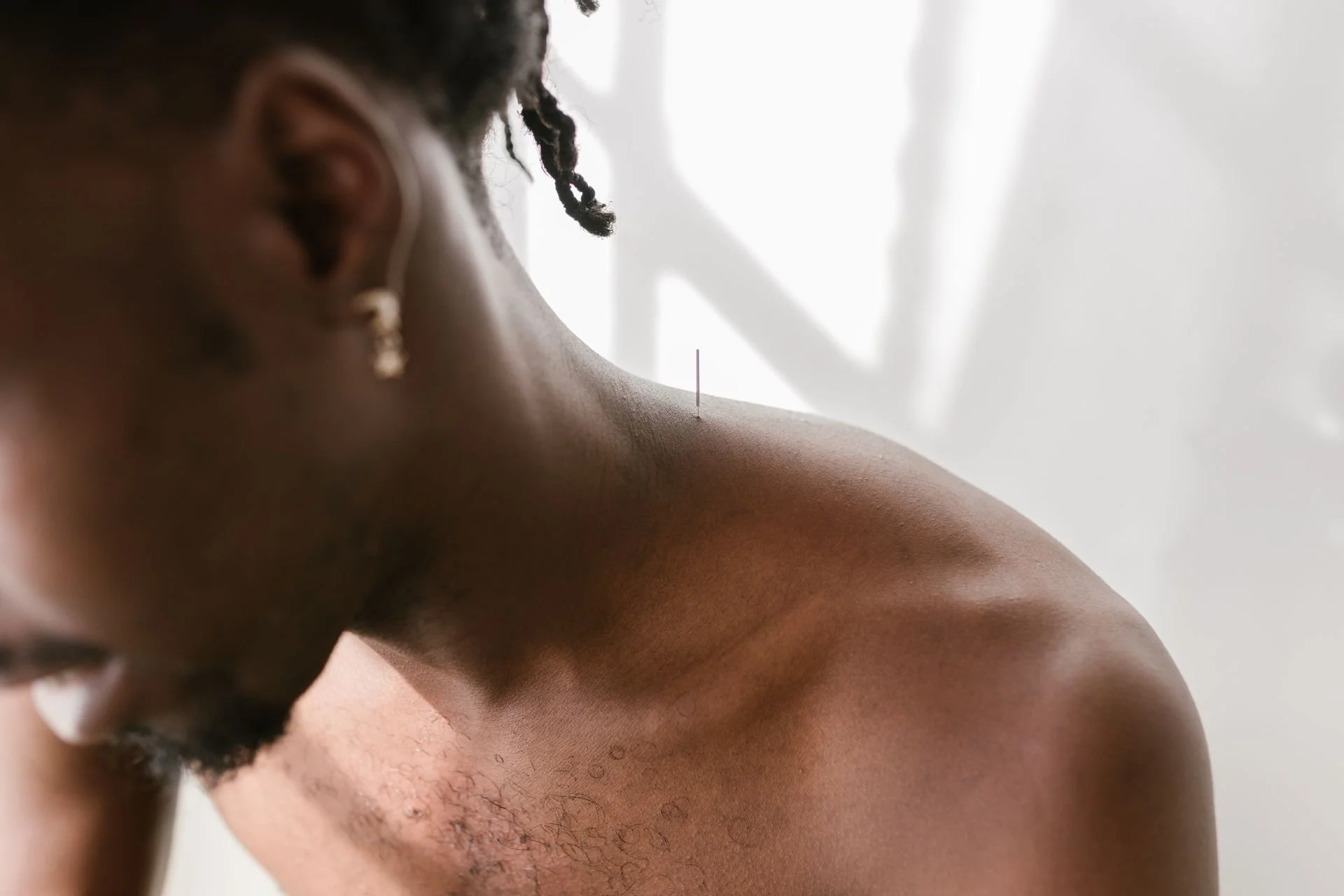
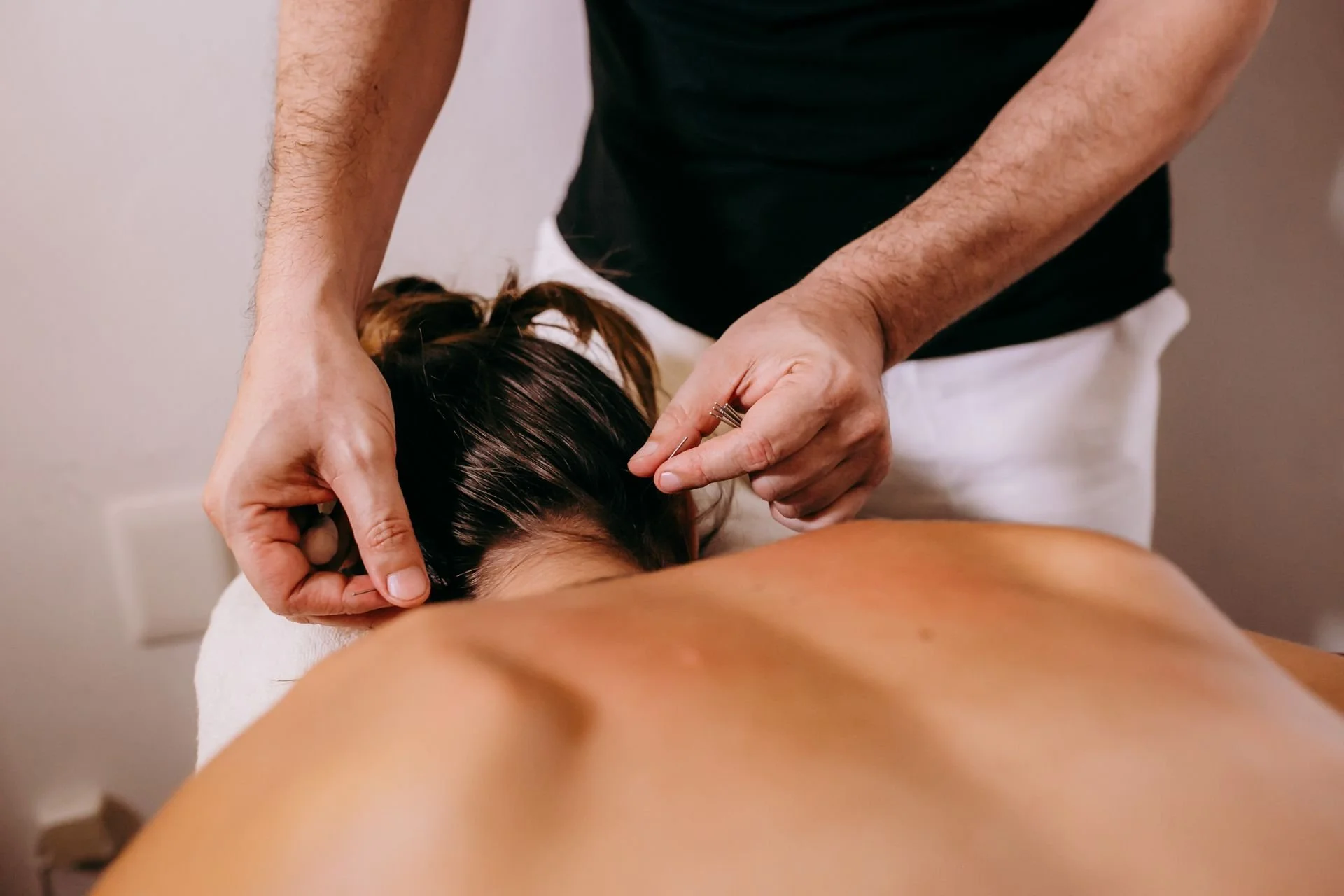
Acupuncture treats the cause and the symptom in the same visit. Fine needles into the tight muscles of the neck and upper shoulders prompt them to release, improve blood flow, and calm the nervous system that has been holding everything on high alert. As the muscle tension and joint irritation settle, the referred pain feeding the headache settles with it.
That dual action is the whole point of treating the two together. Loosening the upper trapezius and the small muscles at the base of the skull removes the trigger, while the broader nervous-system calming reduces how readily a headache fires in the first place.
In Traditional Chinese Medicine, the practitioner also looks at the pattern behind the tension, for example a stress-and-tension picture (often read as Liver Yang rising) versus a stagnant, knotted-muscle picture (a blood stasis pattern). That pattern, not just the sore spot, guides the points chosen, and it is why a treatment pairs local points that release the knot with distal points on the arms and legs that address the systemic pattern, the held stress and sluggish circulation, driving it in the first place. It is also why acupuncture is different from a good massage: a massage can ease the muscle for a day or two, while the goal here is to release the specific trigger and quiet the nervous-system loop that keeps the tension, and the headaches, coming back.
Tech neck, posture, and stress: the modern causes
Most of the neck pain we see is not from injury. It is from modern life:
Tech neck: hours looking down at a phone or a laptop, loading the cervical spine and the muscles that hold your head up.
Desk posture: a monitor set too low, a chair with no support, a full workday of subtle forward-head position.
Held stress: the reflex of carrying tension in the shoulders and jaw, which quietly tightens the whole neck.
Across Johnson County, desk-bound work is the single most common thread. A long commute up the Metcalf Avenue and I-435 corridor, gripped on the wheel, followed by eight hours at a monitor set a little too low, is a near-perfect recipe for the forward-head posture that loads the upper neck. It is exactly the kind of slow-building tension that turns into both neck pain and headaches.
Where do the needles go for neck pain?
Not only where it hurts. A neck and headache treatment usually works:
The base of the skull and the upper neck, where cervicogenic headaches are generated (well-known points here sit just below the skull).
The upper trapezius and the muscles across the top of the shoulder that pull on the neck.
Points on the hands or forearms that, in Chinese medicine, influence the neck and head.
Acupuncture needles are solid and very fine, set in through a thin guide tube, nothing like an injection. Most people feel a small pinprick at most, then a dull, heavy spread around the point.
What a treatment looks like, and where cupping fits
Your first visit is a full 60 minutes with a doctor who takes a complete history, checks how your neck moves, and identifies the pattern driving the tension before placing a single needle. For stubborn upper-back and trapezius tightness, the plan often pairs acupuncture with cupping, which does more than lift the broad sheets of muscle across the shoulders; by drawing blood to the surface it clears the local stagnation and restores circulation to tissue that needles alone cannot fully reach.
How many sessions for lasting relief?
A recent bout of tension often eases within a handful of visits. Long-standing, daily neck pain with regular headaches usually needs an initial course of once or twice weekly for several weeks, then a taper. Because the cause is often ongoing, posture and stress, lasting relief tends to come from a course of care plus a few habit changes, not a single appointment. If your headaches are primarily migraines rather than neck-driven, that is a different protocol, which we cover in our guide to acupuncture for migraines and tension headaches.
A quick safety note: a headache that is sudden and severe, follows a head injury, or comes with fever, vision changes, weakness, or confusion is not a job for acupuncture. See a physician first.
Neck and headache relief in Overland Park
At Grace Family Acupuncture on West 98th Terrace in Overland Park, this care is provided by Dr. Yang Gong, DTCM, L.Ac., whose background includes hospital sports-medicine work, and Dr. Jing Gong, DAOM, L.Ac., a fifth-generation, board-certified acupuncturist. You can see our full acupuncture for pain relief approach for patients in Overland Park, Leawood, and the wider Johnson County area.
Here is what happens next:
Book your consultation online through our secure scheduling system.
Complete a 60-minute first visit with a full health history and a Traditional Chinese Medicine assessment of your neck and headaches.
Receive a personalized plan that treats the neck and the headache together.
Begin treatment, with the plan adjusted as your symptoms ease.
Book your consultation online and treat the neck that is causing the headache, not just the headache.