
Acupuncture for Back Pain in Overland Park, KS

Sitting through a full workday, then driving home across Johnson County with a lower back that has quietly seized up, is a routine a lot of people here know too well. By the time most of them consider acupuncture, they have already cycled through rest, ibuprofen, a heating pad, and a round of stretches. So the real question is not whether back pain is common. It is whether acupuncture will actually do something the last three things did not.
Short answer: for most people with back pain, yes, it is worth trying, and you are not reaching for something fringe. Major United States clinical guidelines now list acupuncture among the recommended non-drug treatments to consider first for low back pain, for both recent flare-ups and long-standing pain. Acupuncture for back pain typically runs as a course of about 6 to 12 sessions at Grace Family Acupuncture, in full 60-minute visits with a doctor, at our clinic on West 98th Terrace in Overland Park. Here is how it works, what the evidence says, and how to tell ordinary back pain from sciatica.
How acupuncture relieves acute and chronic back pain
Acupuncture does not work by masking pain the way a pill does. Fine needles placed at specific points prompt several measurable responses: local muscle tension releases, blood flow to the area improves, and the nervous system dials down the pain signaling that keeps a sore back stuck in a protective, guarded state.
That matters because acute and chronic back pain are not the same problem:
Acute back pain (the last few days or weeks): often a muscle strain, a spasm, or a joint that locked up. Here acupuncture works mostly by releasing the spasm and calming the area so you can move again.
Chronic back pain (three months or longer): the original injury may be long healed, but the nervous system has learned the pain. Here the work is retraining that pattern over a course of visits, not chasing a single knot.
In Traditional Chinese Medicine terms, an acute spasm often maps to Qi and Blood stagnation that simply needs moving, while long-standing, dull back pain frequently signals an underlying deficiency in the body. That is the reason the doctors read your pulse and tongue and may needle distant, systemic points as well as the sore area, rather than only chasing the spot that hurts. Knowing which one you have changes the plan, and it is the first thing we sort out.
Does acupuncture work for back pain? What the evidence says
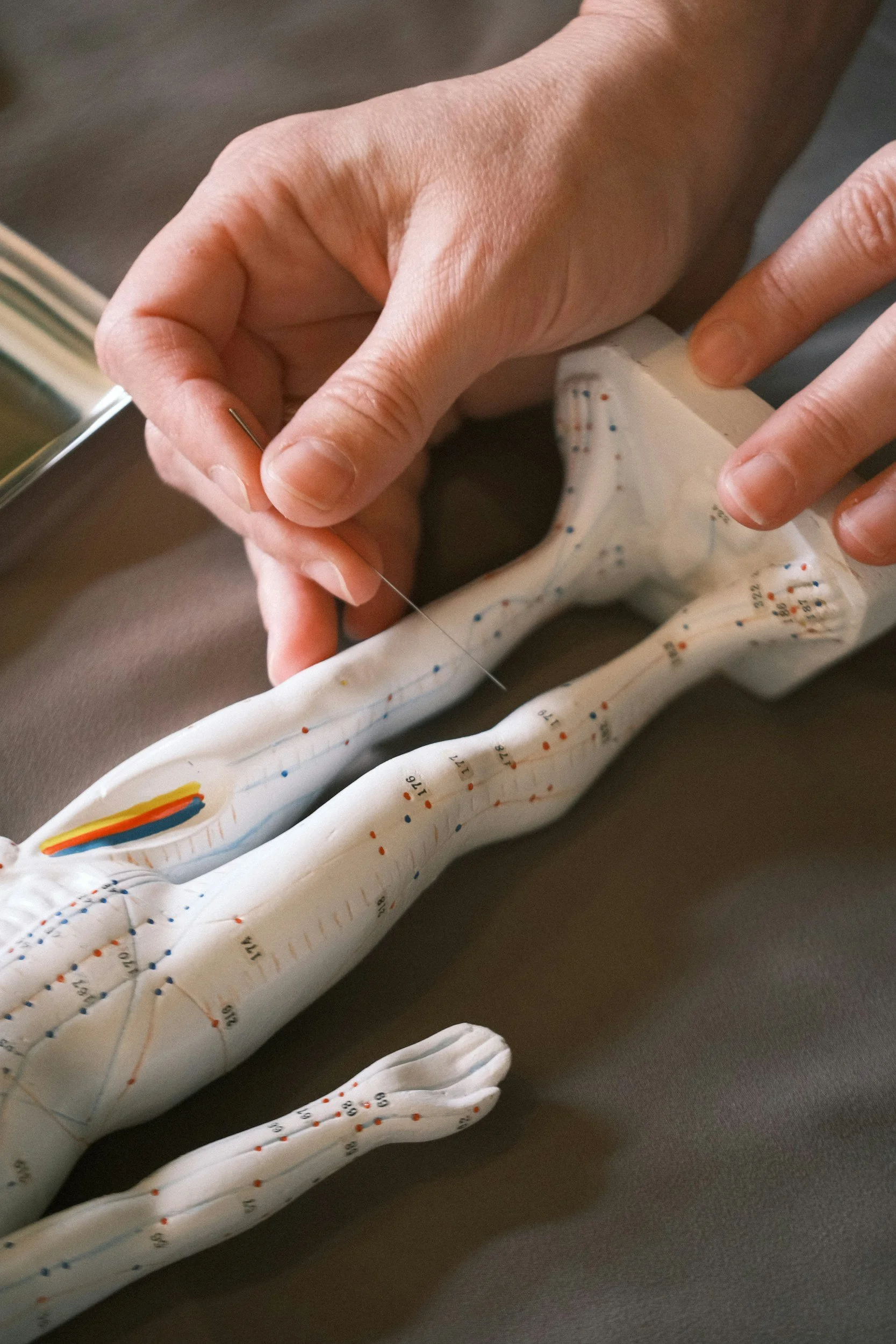
This is the question worth answering directly. Acupuncture is one of the better-studied non-drug options for low back pain. It is recommended in major clinical guidelines as a treatment to try before, or alongside, medication, and recent research continues to back that up, including studies funded by the United States National Institutes of Health that found acupuncture improved both pain and day-to-day function in chronic low back pain, with benefits that held over time rather than fading the moment treatment stopped.
What that does not mean is a guaranteed cure. It means acupuncture has a real, documented track record for back pain, a strong safety profile, and none of the side effects that come with long-term pain medication. For a private-pay decision, that combination is the honest case for trying it.
Is acupuncture a reasonable next step for your back?
It tends to be a sensible option if you recognize yourself here:
Your back pain has lasted more than a few weeks, or keeps coming back.
Medication helps a little but you do not want to live on it.
Imaging found nothing surgical, and you have been told to "manage it."
You want to address the cause, not just numb the symptom.
If your pain is accompanied by loss of bladder or bowel control, sudden leg weakness, fever, or follows a serious fall or accident, that is a medical emergency or a doctor visit first, not acupuncture.
Lower back pain vs sciatica: what is actually causing it
Plenty of people call everything below the ribs "back pain," but the distinction matters for treatment.
Lower back pain usually stays in the back itself: a deep ache, stiffness, or a band of tension across the lumbar region, often worse after sitting or first thing in the morning.
Sciatica is nerve pain. It starts in the lower back or buttock and shoots down the leg, sometimes past the knee, often with burning, tingling, or numbness.
If your pain travels down the leg, you are likely dealing with the sciatic nerve, which is treated a little differently. We cover that in our guide on whether acupuncture works for sciatica. If it stays in your back, this page is your starting point.

How many sessions for back pain, and what it costs
Acupuncture for back pain is a course of care, not a one-off. Most back-pain patients are seen once or twice weekly at first, then taper as the pain settles. A rough guide:
A recent strain or flare often eases within a handful of visits.
Long-standing chronic back pain usually needs the fuller 8 to 12 range, sometimes more, because a pattern built over years unwinds gradually.
On cost: we are a private-pay clinic, which means full 60-minute visits one-on-one with a doctor rather than short, insurance-driven sessions. Our current first-visit and follow-up rates are listed on our online booking page. For national context, private acupuncture sessions in the United States commonly run roughly 80 to 150 dollars per visit. The smarter way to budget is by the course of care, not the single visit.
What to expect at Grace Family Acupuncture
Your first visit is a full hour. Care is provided by Dr. Yang Gong, DTCM, L.Ac., our founder with more than 30 years of clinical experience and a background that includes hospital sports-medicine work in China, and by Dr. Jing Gong, DAOM, L.Ac., a fifth-generation, board-certified acupuncturist and herbalist. One of them takes a complete health history, asks how and when your back behaves, and reads the Traditional Chinese Medicine diagnostic signs, including the pulse and tongue, which are not a formality but the core of how the root pattern behind your pain is identified. Only then is a plan built for your specific back.
Care is drug-free and root-cause focused. For stubborn muscular back tension, a plan may also fold in cupping, and you can see our full acupuncture for pain relief approach for the conditions we treat throughout Overland Park and neighboring Leawood and Prairie Village.
What most back-pain sufferers get wrong
The common mistake is waiting for the back to "calm down on its own" through round after round of medication, then arriving for acupuncture a year later with a pattern that is now deeply set. The second is stopping after one or two visits because the pain did not vanish overnight; acupuncture for back pain is cumulative, and the early visits are where we learn how your body responds. The third is treating leg pain as back pain, when shooting, traveling pain down the leg points to the sciatic nerve and a different approach.
Book your back pain consultation online
Here is what happens next:
Book your consultation online through our secure scheduling system.
Complete a 60-minute first visit, including a full health history and a Traditional Chinese Medicine assessment.
Receive a personalized plan that names how many sessions your back is likely to need.
Begin treatment, with the plan adjusted as your function improves.
If back pain has outlasted everything you have thrown at it, a focused course of acupuncture is a reasonable next step. Book your consultation online and start with a plan built for your back.
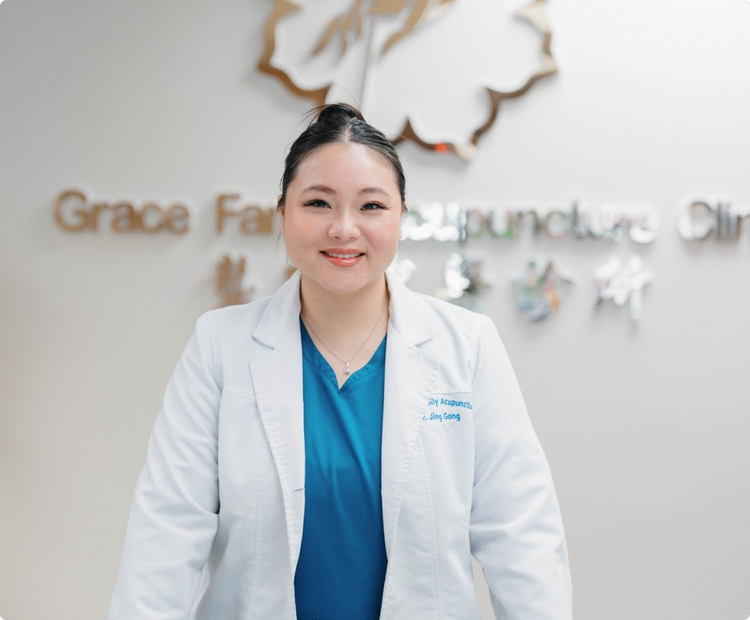
Dr. Jing Gong, DAOM, L.Ac., Dipl. O.M. (NCBAHM),
is the Managing Director and Principal Clinician of the practice. Born into a five-generation family of esteemed Traditional Chinese Medicine (TCM) practitioners, she seamlessly blends her rich ancestral lineage with her Doctorate in Acupuncture & Oriental Medicine. Dr. Gong's integrative approach combines ancient Chinese medical wisdom, modern Western knowledge, and energy medicine to identify the root causes of imbalance. Having treated thousands of patients, she provides precise, holistic care for the body, mind, and spirit, ensuring every visit is deeply restorative and empowering.